

You probably know the voice. The one that sneaks up on you the second your dog walks into the room — the bright, bouncy, slightly embarrassing version of yourself you never use with anyone else. Most people chalk it up to habit or affection or plain silliness, but the truth is stranger. Something happens between human and dog in those moments, something instinctive and surprisingly consistent across cultures and households. The real puzzle isn’t that we talk this way. It’s why it works so well — and what your dog might understand that you don’t.
The Voice We Pretend We Don’t Use

Most dog owners insist they don’t talk to their pets in a ridiculous voice. Science suggests otherwise. Humans reliably switch into dog-directed speech, a vocal register similar to infant-directed speech, marked by higher pitch and exaggerated melody.
Researchers studying the habit found that dogs orient faster and hold their gaze longer when they hear this style of speech. It’s less about cute theatrics and more about how the dog brain prioritizes emotional salience over linguistic detail.
Why Dogs Lock In When You Sound Silly
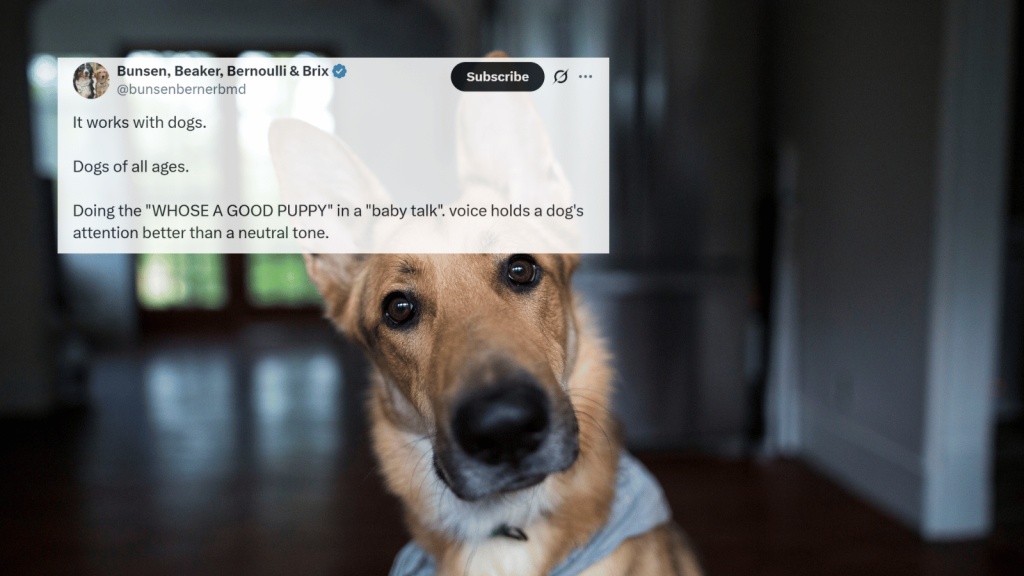
In canine cognition labs, researchers measure attention through head turns, ear movement, and gaze duration. A consistent pattern emerges: dogs “lock in” when humans raise pitch.
Higher frequencies fall into a sensitivity range where dogs naturally detect socially meaningful cues. Evolution selected for this; early dogs survived by recognizing cooperative humans, and tone was often a clearer signal than words.
The Surprising Power of Upward Pitch

Higher pitch might feel ridiculous coming out of your mouth, but it lands precisely in the acoustic sweet spot that activates a dog’s auditory cortex.
Neuroimaging studies show that dogs process these melodic tones with stronger activation in regions linked to attention and social expectation. Your dog hears pitch as information about emotional intent.
The Rhythm That Feels Safe

Baby-talk isn’t just high-pitched; it’s rhythmically slower, with rounded vowels and softened consonants. This pattern mirrors what caregivers use with infants because both infants and animals respond to predictable, gentle cadence.
For dogs, slower rhythm decreases uncertainty. They process tone faster than semantic content, so a smooth, exaggerated pattern communicates safety and consistency.
Why Your Normal Voice Doesn’t Cut It
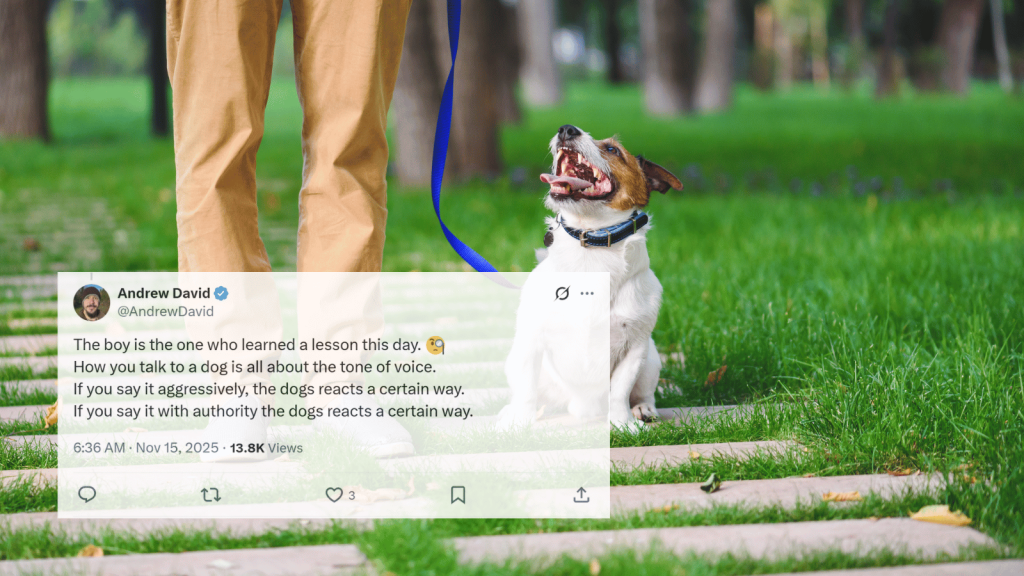
A neutral adult voice contains abrupt consonants, flatter melody, and rapid phrasing — cues that can feel ambiguous or even tense to dogs.
Their auditory system is tuned to detect emotional contour rather than lexical precision. The more monotone your delivery, the harder it is for them to determine your intention.
Dogs Respond to Emotion, Not Vocabulary
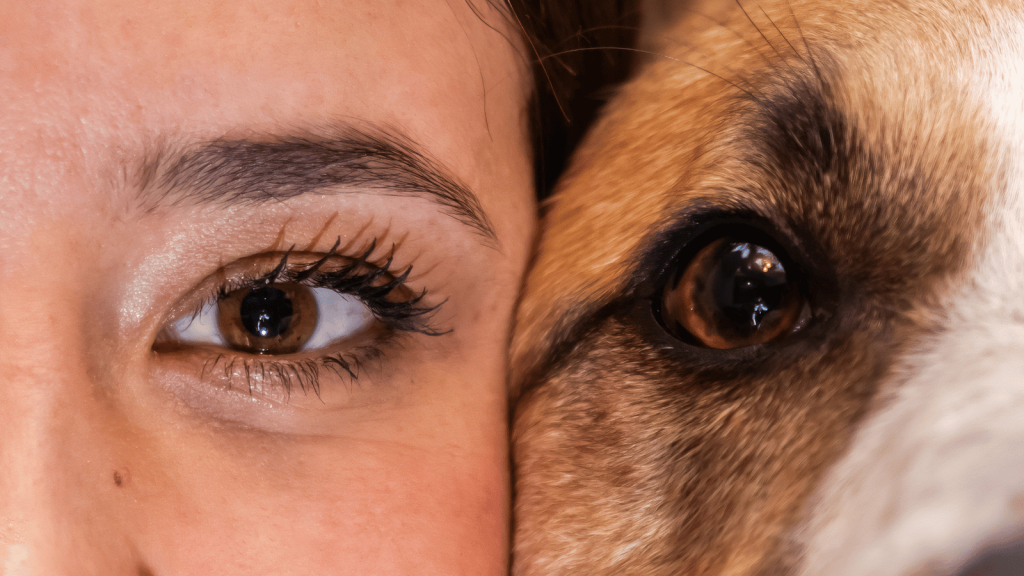
Dogs recognize individual words, but studies show they rely far more on tone to determine meaning. Praise delivered in a cheerful tone produces increased activity in reward pathways even if the word itself is unfamiliar.
Tone acts as the primary signal; words simply refine the message if the tone already feels safe and inviting.
When Exaggeration Improves Clarity

Exaggeration helps dogs decode intention. Slower pace and wider pitch variability offer more acoustic landmarks to follow.
Cognitive research suggests dogs treat these vocal patterns as clearer markers of human mood, which helps them predict what happens next — play, rest, affection, or instruction.
The Oxytocin Chemistry Loop
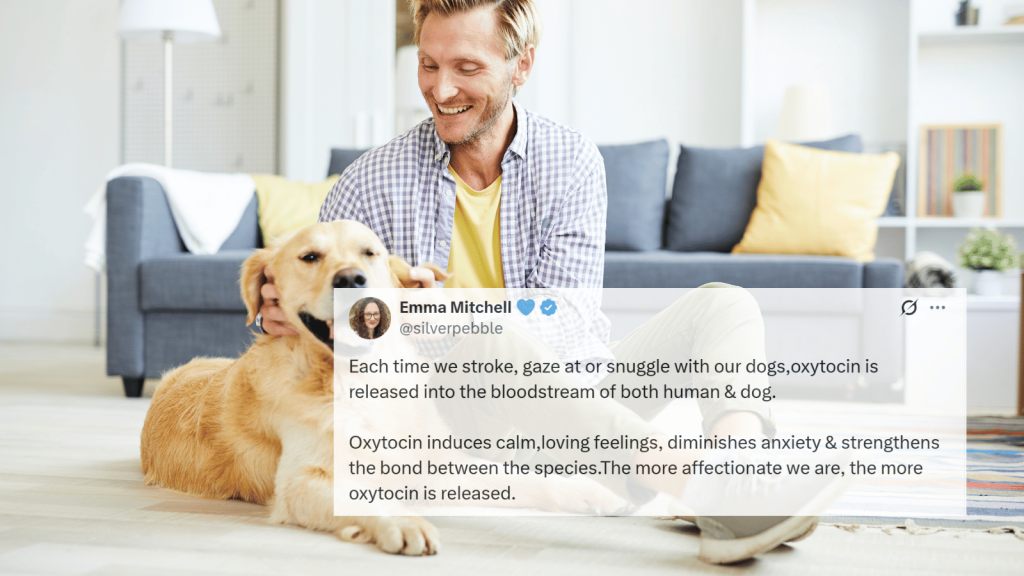
Speaking in a soft, melodic register increases oxytocin in both humans and dogs. This hormone supports bonding, reduces stress, and encourages trust.
When owners use dog-directed speech, dogs often respond with proximity-seeking behaviors, which further reinforce the oxytocin cycle. Your emotional state becomes part of the communication system.
Dogs Monitor Your Nervous System
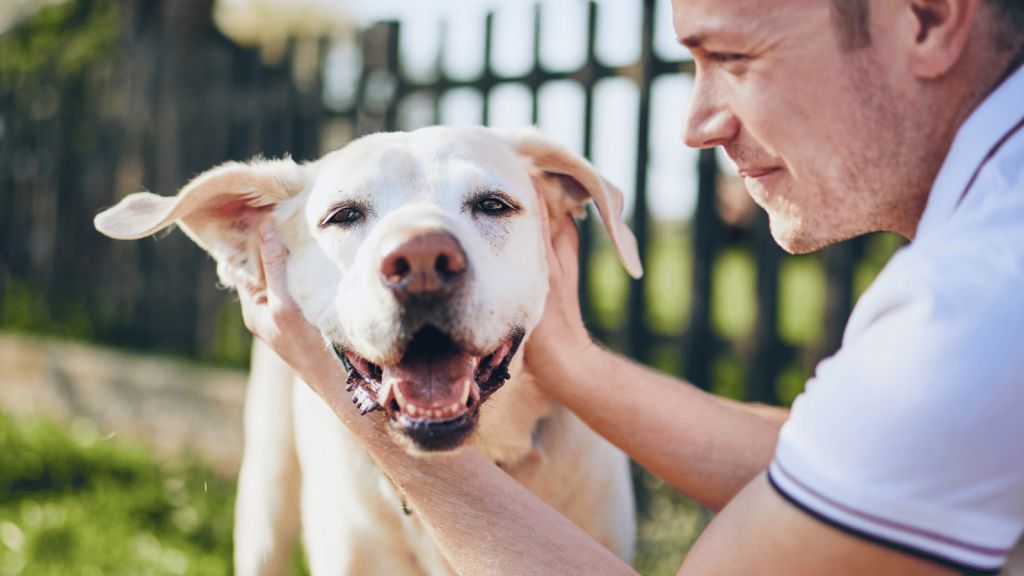
Dogs read your posture, breath rate, scent, and facial tension before you say a word. When you switch into baby-talk, your nervous system shifts into a calmer, more affectionate mode.
Dogs pick up on that physiological change. They hear not just your voice, but the emotional state carried inside it.
The Comfort of Predictability

Dogs thrive on patterns. Baby-talk is one of the most reliable vocal patterns humans produce. It repeats across individuals and settings: greeting, praise, soothing, calling.
Because the melodic contour stays consistent, dogs treat it as a dependable cue, which reduces uncertainty and builds confidence in social interactions.
Why Puppies Respond Strongest

Puppies are especially responsive to dog-directed speech, likely because their auditory system develops around exaggerated cues from both conspecifics and humans.
In one experiment, puppies preferred high-pitched, puppy-directed talk over regular speech, suggesting early learning amplifies this sensitivity.
When Dogs Vocalize Back

Some dogs make small yips, grumbles, or throat rumbles when humans talk in baby-talk. This is a form of social mirroring.
Dogs often match the emotional intensity of sounds they hear, so your warm, animated tone encourages a low-stakes conversational response.
A Communication Style Shaped Across Millennia
Domestication shaped dogs to be responsive to human social cues. Vocal tone was one of the earliest, most reliable cues before words or gesture-based commands developed.
Baby-talk slots into this long history as a vocal mode that compresses friendliness, safety, and attention into one signal.
Why Some Dogs Tilt Their Heads
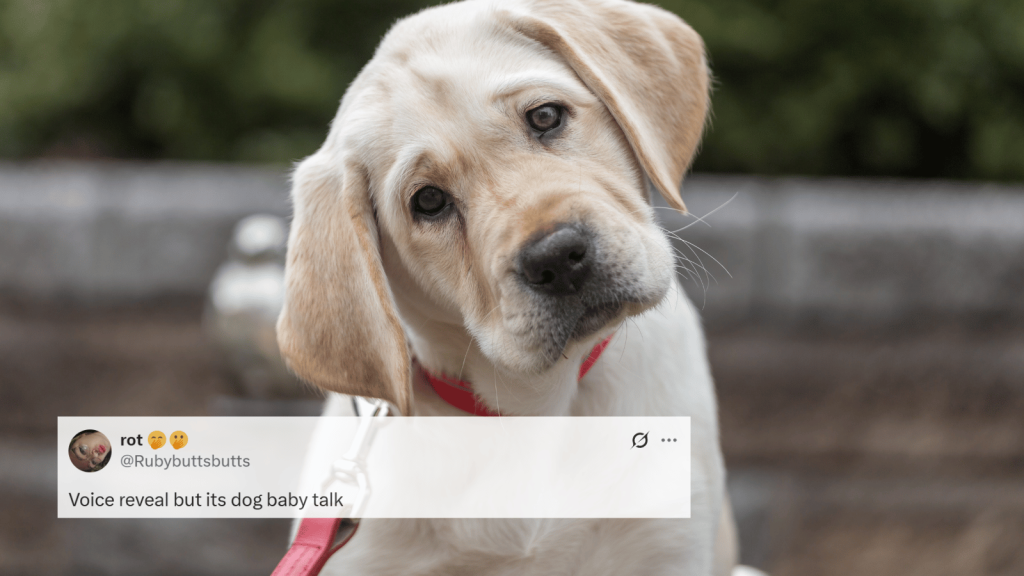
The iconic head tilt isn’t just cuteness; it’s an effort to localize sound and interpret emotional meaning.
Researchers believe dogs tilt more when processing unfamiliar or highly expressive tones, which means baby-talk often triggers a perceptual adjustment to refine understanding.
When Tone Becomes a Training Tool

Even without formal cues, dogs learn to associate your high-pitched encouragement with positive outcomes. Trainers sometimes use lighter, melodic tones to reinforce behaviors because dogs interpret them as rewarding.
Your embarrassing voice quietly doubles as an accidental training aid.
Why Dogs Ignore You When You’re Flat
A flat voice provides little emotional information. Dogs may interpret it as disinterest or mild tension, depending on your body language.
If your dog seems to “ignore” you until you raise your pitch, it’s not disobedience; it’s poor acoustic signaling on the human side.
Tone as an Emotional Bridge

Baby-talk helps bridge the emotional gap between species. It compresses warmth, gentleness, and attention into a single sensory channel dogs process efficiently.
This bridge becomes especially important in moments of fear, transition, or excitement.
The Social Intelligence of Dogs

Dogs evolved to read humans with unusual sensitivity among animals. They detect micro-expressions, track eye movement, and categorize tone types within milliseconds.
Baby-talk works because it amplifies the exact cues dogs are already primed to monitor.
When You Don’t Realize You’re Doing It
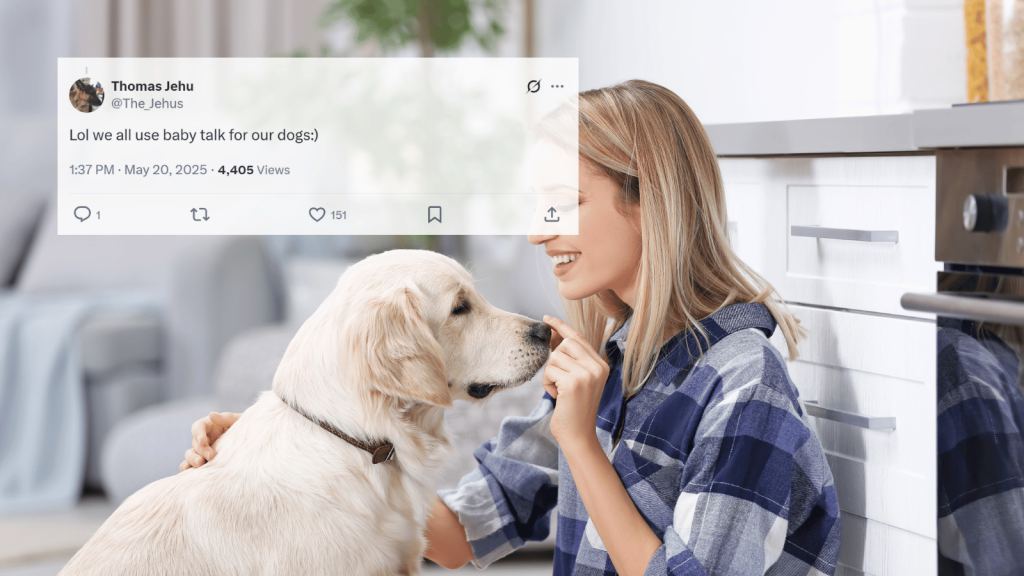
Most adults shift into baby-talk unconsciously. The behavior emerges automatically during affectionate interactions. Humans modulate tone instinctively with beings that rely on emotional rather than linguistic clarity.
Your body does the work without consultation.
The Voice Dogs Trust Most
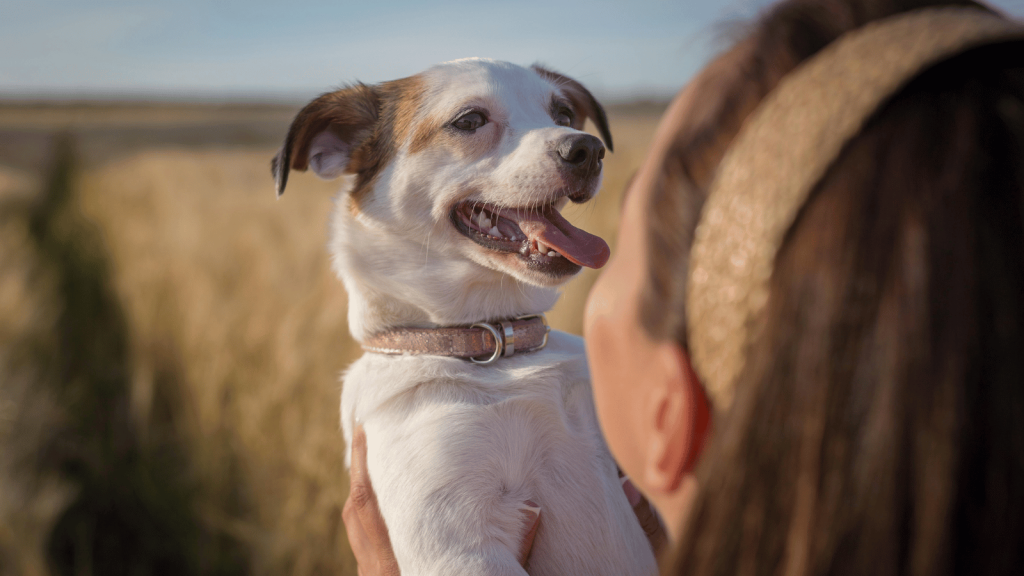
Baby-talk isn’t a performance; it’s an unfiltered register that reveals friendliness without ambiguity. This clarity is what dogs trust.
Your dog listens closely because the voice signals warmth, intention, and safety more honestly than your everyday tone.


