
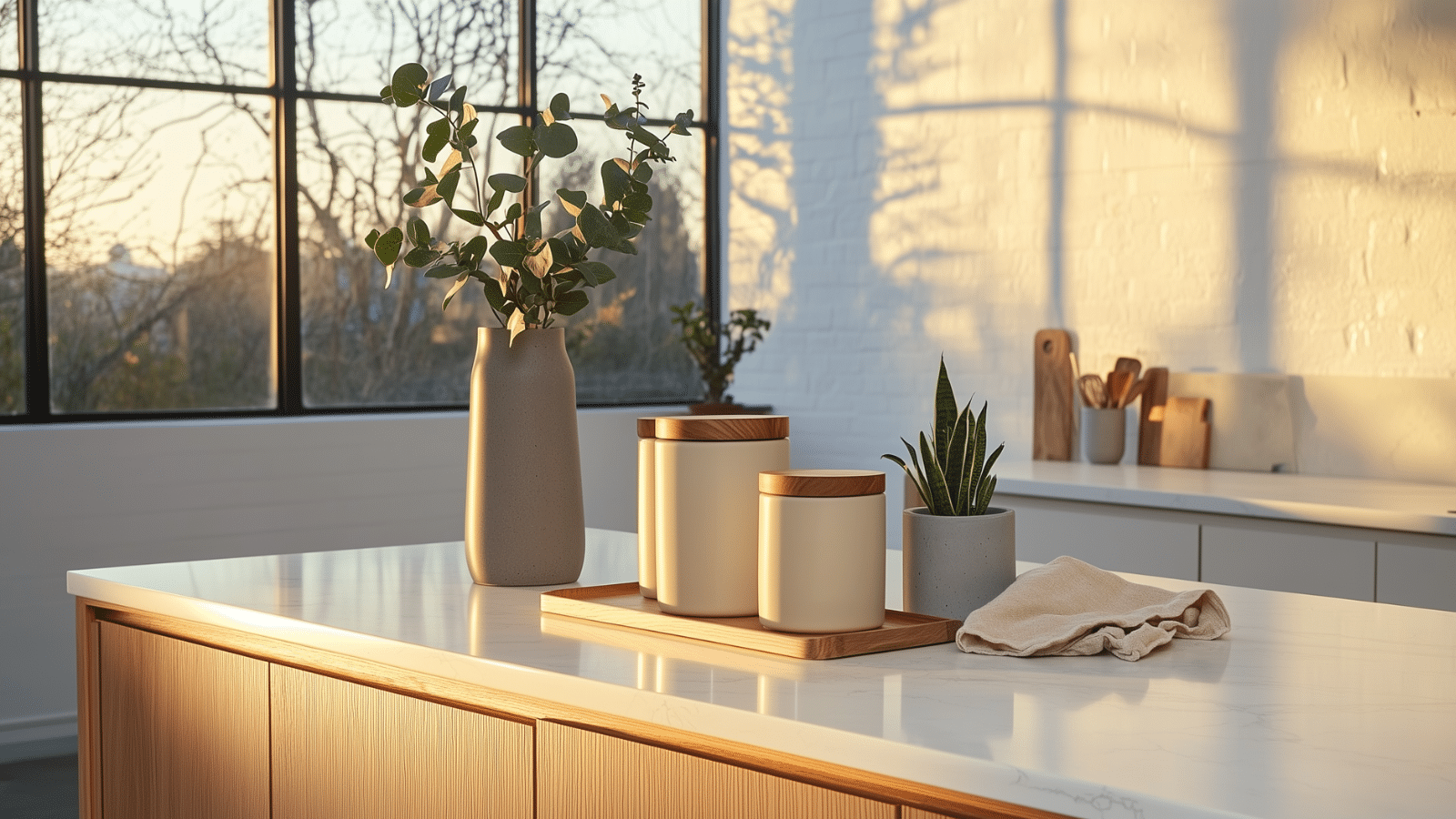
Modern organic gets misunderstood. People hear “organic” and picture a lot of wicker, hear “modern” and worry it’ll feel sterile. But modern organic kitchen counter decor is actually the sweet spot between those extremes: natural materials with clean lines, warmth without clutter, minimalist but not cold.
It’s for people who want their kitchen to feel calm and grounded without sacrificing style. Think smooth ceramics in neutral tones, live-edge wood next to sleek stone, one perfect plant instead of five okay ones. Everything intentional, nothing excessive.
If you’re drawn to natural textures but want cleaner lines than farmhouse, or you love modern minimalism but need more warmth, modern organic might be your aesthetic. Not sure? Take our kitchen counter decor style quiz to find out!
This guide covers what makes counter decor feel modern organic (versus just modern or just natural), plus the specific pieces that create the look.
(Exploring different counter styles? Our complete kitchen counter decor guide covers farmhouse, japandi, modern, and more.)
What Defines Modern Organic Counter Decor?
Before diving into shopping and styling, let’s clarify what makes counter decor feel modern organic rather than just “natural” or “minimalist.”
Clean Lines Meet Natural Materials
Modern organic is the intersection of contemporary design and natural elements. You’ll see straight edges and geometric shapes, but in wood, stone, and ceramic rather than metal and glass. A smooth wooden board with squared-off edges. Cylindrical ceramic vessels in matte finishes. Everything has clean silhouettes, but the materials keep it warm.
The “modern” part gives you restraint and sophistication. The “organic” part brings in texture and life. Neither dominates – they balance each other.
A Neutral, Earthy Palette
Modern organic counters live in the world of beiges, taupes, warm grays, soft whites, and natural wood tones. You might see sage green from plants or terracotta from pots, but colors are always muted and earth-derived.
This isn’t about being boring – it’s about creating visual calm. When everything exists in the same tonal family, your eye relaxes. The interest comes from texture and form, not color contrast.
Quality Over Quantity
Where farmhouse says “collected over time,” modern organic says “carefully curated.” You’re not displaying multiple items unless each one earns its place. One beautiful vase beats three okay ones. Two perfectly chosen ceramic pieces outweigh a whole collection.
This aesthetic requires editing. If something doesn’t actively contribute to the space – functionally or aesthetically – it doesn’t belong on your counter. The restraint is what makes each remaining piece feel important.
Handcrafted and Artisanal
Modern organic gravitates toward pieces that show human touch without being rustic. Think pottery with subtle variations in glaze, cutting boards with natural edge details, or hand-thrown ceramics with organic shapes. You want pieces that feel made by hands, not machines, but with clean rather than rough finishes.
Imperfections are acceptable – welcomed, even – but they should be intentional. A thumbprint in clay? Yes. A mass-produced fake distressed finish? No.
Sustainable and Mindful
While not required, modern organic style often aligns with sustainable choices. Natural materials like wood, stone, and clay. Pieces designed to last rather than trend. Items you’ll use rather than just display.
This isn’t about performative minimalism or expensive “eco” branding. It’s about choosing durable materials, buying less but better, and surrounding yourself with pieces that feel substantial rather than disposable.
Essential Elements for Modern Organic Counter Decor
Now that you understand the aesthetic, here are the specific pieces that create a modern organic counter. You don’t need everything at once – in fact, you shouldn’t. Build slowly, choosing only what you’ll actually use and genuinely love.
Sculptural Ceramics: Your Foundation
Modern organic counters rely on ceramic pieces with architectural presence. Unlike farmhouse canisters with vintage labels or modern containers in perfect cylinders, modern organic ceramics split the difference: clean shapes with organic variation.
Look for vessels in matte finishes – cream, oatmeal, warm gray, soft white, or natural clay. Smooth surfaces but irregular shapes. Straight sides that aren’t quite perfectly uniform. Pieces that feel handmade without being precious. We love this Vancasso White ceramic canister set for its substantial weight and warm matte finish that perfectly captures modern organic style.

What to choose:
- Ceramic canisters for storing coffee, tea, or pantry staples (choose 1-3, not a whole set)
- A large ceramic bowl or vessel as a focal point
- Simple ceramic containers for utensils or miscellaneous items
- Everything in the same tonal family but with subtle variation
How to style:
- Group 2-3 canisters maximum – modern organic is restrained
- Place the largest item slightly off-center with smaller pieces supporting
- Leave significant negative space between items
- Keep surfaces matte or satin, never glossy
- Choose pieces with weight and substance
When selecting ceramics, pick up the piece if possible. It should feel substantial in your hand, not lightweight or hollow. Quality matters more than quantity in this aesthetic.
Natural Wood Elements (But Make Them Sleek)
Wood brings essential warmth to modern organic counters, but it’s treated differently than in farmhouse kitchens. You’re looking for clean cuts and smooth finishes, not distressed or heavily rustic pieces.
Best choices:
- A single large cutting board with live edge (natural edge on one or two sides, clean straight edges on others)
- Simple wooden tray in walnut, oak, or maple with minimal ornamentation
- Wooden utensils with clean, tapered designs
- Maybe one wooden bowl in a sculptural shape
The wood should show natural grain but have smooth, finished surfaces. No visible saw marks, no artificially aged finishes, no rope handles or painted details. Just beautiful wood being wood.
This handcrafted walnut live edge cutting board perfectly balances rustic charm with modern clean lines—each one is truly unique and made by an American Amish community.

Styling with wood:
- One large cutting board propped against backsplash or stored vertically
- Wooden tray to organize a small grouping (2-3 items maximum)
- Wooden spoons and spatulas in a ceramic holder, not displayed loose
- Wood tones can vary slightly but should all be natural, not stained
Think quality hardwoods over bamboo (which reads more coastal or tropical). Oak, walnut, cherry, and maple all work beautifully. The key is that wood provides warmth without becoming the dominant material – it’s balanced with ceramic and stone.
We use this beautiful black oak tray to organize coffee essentials or group ceramics—it’s clean-lined and lets the items on it be the focus.
One Perfect Plant (Not a Garden)
Where farmhouse might have herb pots, succulent collections, and fresh flowers, modern organic commits to one or two really well-chosen plants. Quality over quantity applies to greenery too.
Best plant choices:
- Snake plant (sansevieria) in simple ceramic or concrete pot – architectural leaves, nearly indestructible
- Small monstera – graphic leaves, statement-making
- Pothos in minimal planter – trailing greenery, forgiving care requirements
- Single stem of eucalyptus in a tall ceramic cylinder
- One orchid in neutral pot (when you’re ready to maintain it)
The pot matters as much as the plant. Simple geometric shapes in matte ceramic, unglazed terracotta, or concrete. No decorative patterns, no bright colors, no plastic showing. The planter should disappear and let the plant be the feature.
This cylindrical ceramic planter is the perfect minimalist vessel for your snake plant or monstera.

Where to place: Choose one spot for your plant and commit. Not multiple plants scattered around – one substantial plant in a strategic location. Back corner, end of counter, or adjacent to your main grouping. Let it anchor the space rather than compete for attention.
Minimal Counter Organizers
Modern organic kitchens need storage solutions that are beautiful enough to leave out but streamlined enough to fade into the background.
Smart choices:
- Ceramic or wooden utensil holder with clean lines
- Simple tray (wood, marble, or ceramic) to contain daily items
- One small bowl for odds and ends
- Soap dispenser in ceramic, glass, or stone (never plastic)
Avoid anything with excessive detail, busy patterns, or decorative elements. The organizing piece itself should be attractive but not attention-seeking. It’s there to hold other things, not to be the focal point.
This ceramic utensil holder has the weight and matte finish that defines modern organic style.

Modern organic also embraces hidden storage. A bread box in simple form. Canisters with lids. Covered containers. Things can be put away while remaining accessible.
Complete your tray vignette with these natural linen kitchen towels—they have the perfect oatmeal tone and get softer with every wash.
Stone and Concrete Accents
Where appropriate, stone or concrete elements add modern organic credibility. These materials feel grounded and substantial while maintaining clean lines.
Options to consider:
- Marble or stone tray or board
- Concrete planter for your plant
- Stone mortar and pestle if you actually use one
- Slate or stone trivet
- Soapstone or granite as accent pieces
These don’t need to be large or prominent. A small stone element is enough to introduce the material. You’re not trying to create a geology exhibit – just adding textural variety.
The Right Appliances
Modern organic kitchens can embrace contemporary appliances more openly than farmhouse, but choices still matter. Clean, simple designs in neutral colors work best.
Look for appliances in:
- Brushed stainless steel (not high-polish chrome)
- Matte white or cream
- Soft gray
- Natural metal finishes
Avoid:
- Bright colors
- Glossy black (unless it’s truly minimal in design)
- Plastic-heavy construction
- Excessive digital displays or buttons
If you have an espresso machine, pour-over setup, or kettle on your counter, make it one that looks sculptural and intentional. These items get regular use, so they can stay out, but they should complement your aesthetic rather than fight it.
How to Style Modern Organic Counters (The Less-is-More Approach)
Styling modern organic counters requires more restraint than other aesthetics. You’re not filling space – you’re creating it.
Start with Nothing
Seriously. Clear everything off your counters completely. You need to see the blank space to understand how much or how little to add back.
Modern organic styling is subtractive, not additive. You’re not asking “what else can I add?” You’re asking “what can I remove while maintaining function and beauty?”
The One-Grouping Rule
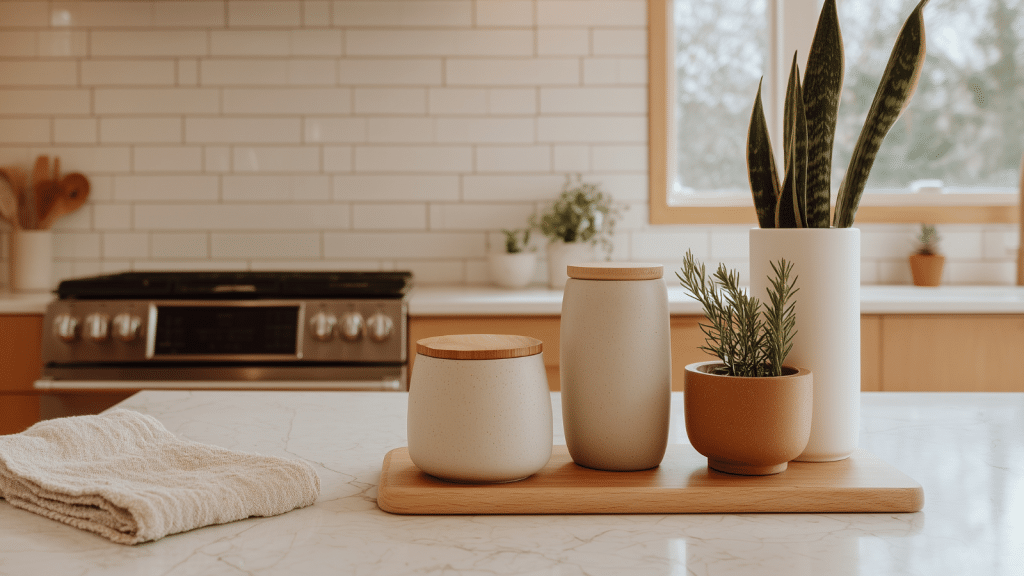
Unlike farmhouse or eclectic kitchens that might have multiple styled vignettes, modern organic counters often work best with a single, carefully composed grouping. Everything else is functional items without decorative staging.
Your main grouping might include:
- Largest item (ceramic vessel, plant, or wooden board) in back or slightly off-center
- Medium item (canister, bowl, or tray) offset from the large item
- Small accent (smaller ceramic, succulent, or simple object)
- Lots of negative space around and between items
That’s it. One grouping. Not three or four scattered across your counters.
Embrace Asymmetry and Negative Space
Modern organic styling is asymmetrical but balanced. Your items shouldn’t line up in neat rows or center themselves perfectly. They should look deliberately placed but not overly composed.
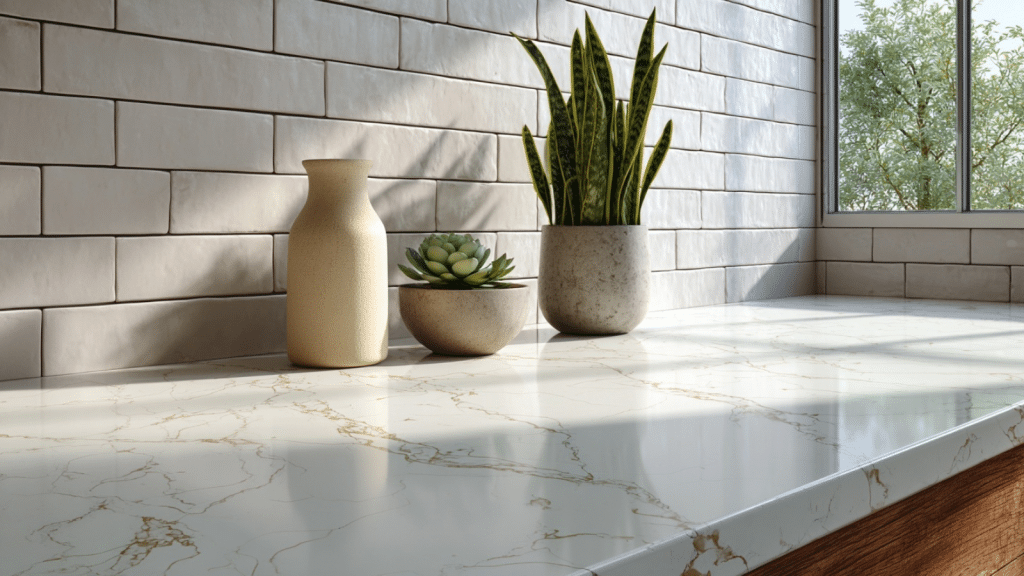
More importantly, embrace the empty space. The counter surface itself is part of the design. Clear expanses of marble, quartz, or wood are beautiful. Don’t feel compelled to fill them.
Aim for 70-80% of your counter being completely clear. This feels extreme if you’re used to more decorated kitchens, but it’s essential to modern organic. The emptiness is what makes your chosen items feel significant.
Layer Texture, Not Items
Visual interest comes from textural variety, not quantity of objects. You want:
- Smooth ceramic next to grainy wood
- Matte surfaces next to natural stone
- Hard materials next to soft (a linen towel, the leaves of your plant)
- Cool tones and warm tones in the same neutral family
You’re creating a composition where every element has a reason to be there. The ceramic provides storage. The wood adds warmth. The plant brings life. Nothing is purely decorative.
The Two-Minute Edit
After styling your counter, walk away for ten minutes. Come back and look with fresh eyes. Then remove one item.
Does it look better or worse? Nine times out of ten, it looks better.
This is the hardest part of modern organic styling – the willingness to edit past your comfort zone. But that restraint is what creates the sophisticated, calm feeling that defines this aesthetic.
Consider Your Countertop Material
Modern organic works beautifully with most contemporary countertop materials, but some feel more natural than others.
Best countertop materials for modern organic:
- Quartz in neutral tones (white, cream, light gray, taupe)
- Marble with subtle veining
- Butcher block or other solid wood
- Concrete (for truly minimalist interpretations)
- Soapstone
The countertop itself should feel substantial and natural (or at least natural-looking). High-gloss finishes or busy patterns compete with the organic simplicity you’re creating.
Seasonal Modern Organic Counter Touches
Modern organic adapts to seasons with subtle shifts in materials and tones, not decorative overhauls.
Spring
Lighten your palette slightly. If you’ve been leaning toward warmer beiges and taupes, shift toward cream and soft white. Add a single stem of a spring flower – tulip, ranunculus, or cherry blossom – in your simplest vase.
The change is barely perceptible, but it signals renewal. Maybe your tea towel shifts from oatmeal to natural linen. Maybe you add one small succulent. The touches are minimal.
Summer
Summer modern organic is about lightness and space. Everything feels more open and airy. Your plant might be something tropical-leaning (monstera rather than succulent). Your wood tones might shift slightly lighter.
Consider adding one element that suggests summer without being literal – a single lemon in a wooden bowl, eucalyptus stems, or a white ceramic vessel that wasn’t there before. But keep it to one addition, not a whole theme.
Fall
Warm things up gradually. Your ceramics might shift from cool-toned gray to warmer beige or clay. Your wood elements become more prominent. Maybe you add a second small plant in a terracotta pot.
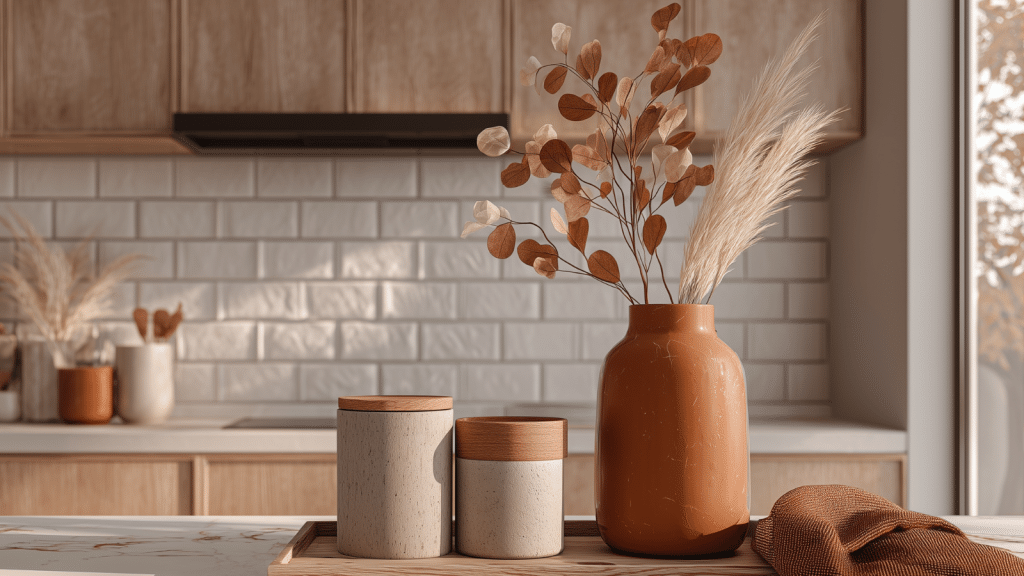
This is not the season for pumpkin displays or harvest decorations in modern organic kitchens. The shift is felt, not seen. Slightly warmer tones. Maybe one dried element – pampas grass stem, dried flowers, wheat – in your most minimal vessel.
Winter
Deepen the tones further. Charcoal rather than light gray. Walnut rather than maple. Your plant becomes more architectural and evergreen. Maybe you add a small piece of driftwood or a smooth stone as a sculptural element.
Winter modern organic feels grounded and substantial. This is the season where concrete or stone elements feel most appropriate. But maintain the same level of restraint – you’re adjusting the tone, not adding quantity.
The key to seasonal modern organic styling: Change 1-2 elements maximum. Swap out your plant. Change your tea towel. Add one seasonal stem to your vase. The shift should be so subtle that someone couldn’t identify exactly what changed, but the space feels different.
If You Love Modern Organic, You Might Also Like…
Japandi
If modern organic appeals to you, japandi is its even more minimalist cousin. Same love of natural materials and clean lines, but with Japanese influence bringing even greater restraint and zen-like calm.
Japandi goes further with negative space and simplicity. Where modern organic might have 2-3 items in a grouping, japandi might have 1-2. Both aesthetics prioritize quality and mindfulness, but japandi is more committed to absolute minimalism.
If you’re drawn to modern organic but find yourself wanting to remove even more, explore japandi counter styling.
Farmhouse (for More Warmth)
If modern organic feels slightly too restrained or cool for you, farmhouse adds more collected charm and cozy elements while keeping natural materials at the forefront.
Farmhouse allows more items on display, embraces vintage pieces, and celebrates functional clutter in a way modern organic doesn’t. Both love ceramic and wood, but farmhouse gives you permission to have more of it visible.
If you love the natural materials of modern organic but want permission to display more things and embrace a cozier feeling, check out farmhouse kitchen countertop decor.
Modern (for Maximum Minimalism)
If you’re drawn to the clean lines of modern organic but less interested in natural materials, pure modern might be your aesthetic. Think sleek surfaces, geometric shapes, and materials like stainless steel, glass, and high-gloss finishes.
Modern shares the minimalist restraint but swaps warmth for sophistication. Where modern organic uses wood and ceramic, modern uses metal and glass. Both edit ruthlessly, but modern leans into cool tones rather than warm neutrals.
If you want the discipline and clean lines of modern organic but prefer man-made materials to natural ones, explore modern kitchen counter decor.
Still Exploring Your Perfect
Kitchen Counter Style?
Take our 2-minute quiz to find out if you’re truly
Farmhouse, Modern, Organic, or Japandi
Plus get personalized product recommendations
Modern Organic Counter Decor: Frequently Asked Questions
What are the must-have items for modern organic counter decor?
Start with these three essentials:
- One or two ceramic vessels – for storage, display, or both. Choose matte finishes in neutral tones.
- One natural wood element – a cutting board, tray, or wooden utensils in a holder. Keep it simple and clean-lined.
- One plant – choose something architectural in a minimal pot. Snake plant, monstera, or single succulent.
That’s honestly enough. Modern organic succeeds through restraint, not accumulation. Three quality pieces outweigh ten mediocre ones.
How is modern organic different from farmhouse?
Both aesthetics love natural materials, but they treat them differently:
Modern organic emphasizes clean lines, restrained quantity, and contemporary forms. Smooth finishes, minimal ornamentation, lots of clear counter space. One perfect cutting board, not three. Sleek ceramic vessels, not vintage crocks.
Farmhouse embraces collected charm, vintage touches, and more items on display. Slightly worn finishes are celebrated. Multiple grouped items. Rustic elements and traditional forms.
Think of modern organic as farmhouse’s sophisticated, minimalist cousin. Same material family, different styling philosophy.
Can modern organic work in a traditional kitchen?
Yes, but it works best when your base (cabinets, countertops, fixtures) is at least somewhat contemporary. Modern organic relies on clean backdrops to let its natural elements shine.
If you have very traditional cabinets with lots of molding and detail, modern organic accessories might not feel cohesive. You could potentially pull it off with a light touch – one plant, simple cutting board, minimal ceramics – but full modern organic styling works best in kitchens with contemporary bones.
That said, natural materials are universal. A beautiful wooden board and simple ceramic vessel will work in almost any kitchen.
How much should I keep on my counters in a modern organic kitchen?
The modern organic rule: If you use it daily and it fits the aesthetic, it can stay out. Everything else goes away.
Definitely keep out:
- Coffee maker or kettle (if design-appropriate)
- One or two ceramic storage pieces
- Your single plant
- Cutting board
- Dish soap in appropriate dispenser
Absolutely store away:
- Appliances you use weekly (not daily)
- Anything with branding or labels showing
- Plastic items
- Collections of things
- Anything decorative that isn’t also functional
If your counter feels crowded, it is. Modern organic should feel spacious and calm, not filled up.
What if I’m not naturally minimalist – can I still do modern organic?
Modern organic requires discipline, but it doesn’t require you to become a different person. If minimalism feels punishing rather than peaceful, this might not be your aesthetic.
That said, you can adapt it. Think “edited” rather than “minimal.” Keep the natural materials and calm palette, but allow yourself 4-5 items in a grouping instead of 2-3. Give yourself permission to have two plants instead of one.
The question is: does editing down make your space feel more calm and intentional, or does it feel restrictive and cold? If it’s the former, modern organic can work for you even if you’re not naturally minimal. If it’s the latter, you might be happier with modern farmhouse or eclectic.
Start With What Actually Speaks to You
Modern organic kitchen counter decor isn’t about following rules or achieving some platonic ideal of minimalism. It’s about creating space that feels calm, grounded, and intentional – space where natural materials and clean lines work together to make your kitchen feel like a retreat.
The beauty of this aesthetic is its simplicity. You don’t need dozens of items or multiple shopping trips. You need a few quality pieces chosen carefully and placed thoughtfully.
Start with one thing. Maybe it’s a ceramic vessel you’ve been eyeing. Maybe it’s finally buying that beautiful wooden cutting board. Maybe it’s clearing everything off your counter and seeing what you actually want to return.
Build slowly. Live with each addition before adding the next. The goal isn’t to finish – it’s to create a space that makes you breathe easier every time you walk into your kitchen.
Still not sure if modern organic is your perfect kitchen counter style? Take our two-minute quiz to find out whether you’re truly modern organic at heart, or if you’re actually more drawn to farmhouse, japandi, or pure minimalism.
Your kitchen counters are real estate you see every single day. Make them count.


