
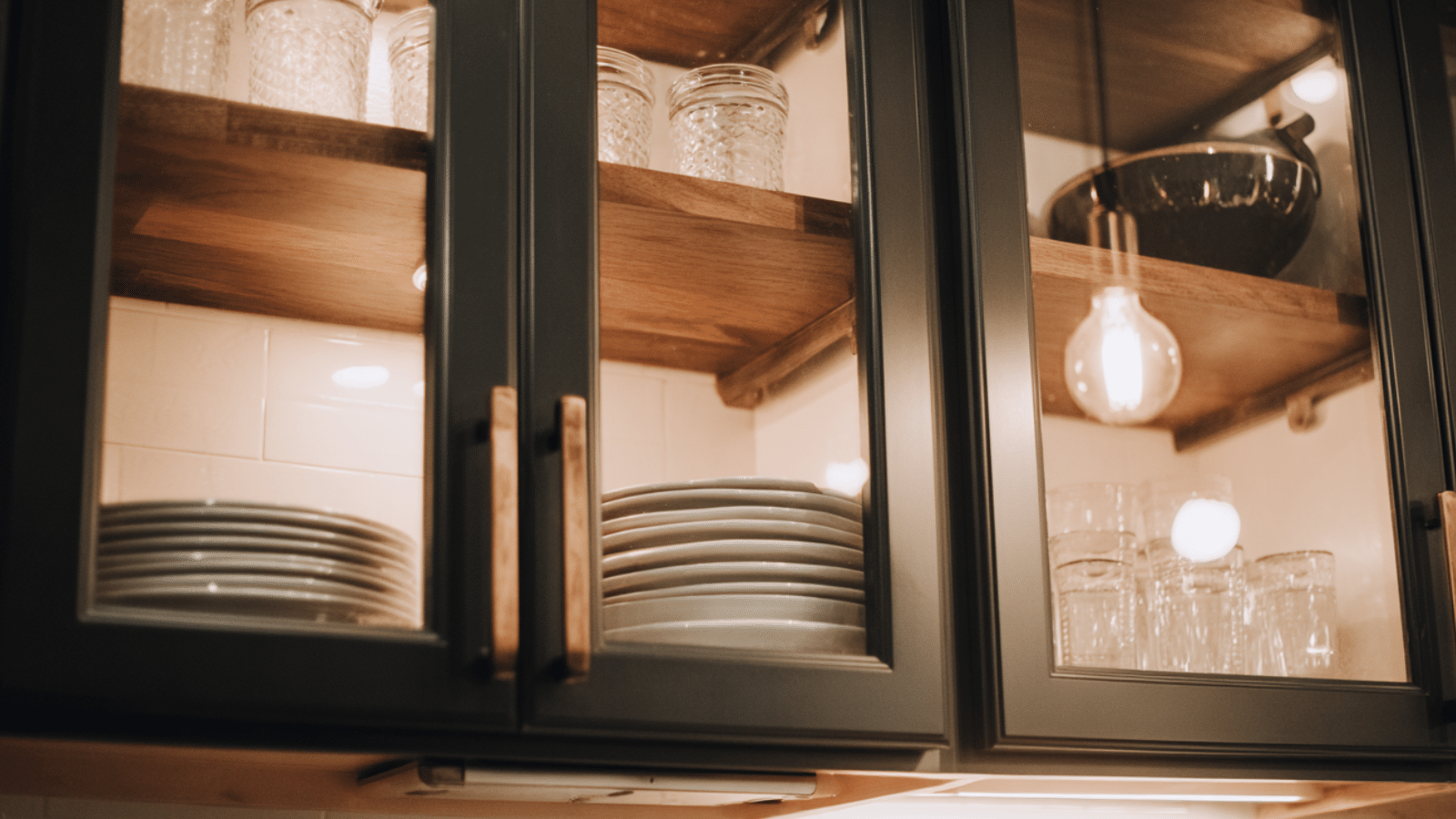
Kitchen Cabinet Organization: Start Here
These simple fixes focus on access, visibility, and systems that actually stick.
📌 Pin this checklist for laterIf your kitchen cabinets feel frustrating, I promise—it’s not because you’re bad at organizing. Cabinets are one of the hardest parts of a kitchen to get right. Shelves are too deep, vertical space gets wasted, and items pile up in ways that make sense for about a week before sliding back into chaos.
The best kitchen cabinet organization ideas don’t focus on perfection. They focus on access, visibility, and systems that are easy to keep up—even on your messiest days.
This guide walks through how I approach kitchen organization in real life, including what to fix first, what actually helps, and where simple upgrades make the biggest difference.
Start With How You Use Your Kitchen (Not How It “Should” Look)
Before touching a single organizer, ask yourself one question: How do I actually use this kitchen?
Kitchen cabinet organization works best when it’s built around function, not categories pulled from Pinterest.
Organize cabinets by task, not by category
I stopped grouping items just because they were similar and started organizing by what happens in each area of my kitchen.
- Near the stove: cooking oils, spices, utensils, and pot holders
- Baking zone: measuring cups, mixing bowls, flour, sugar, baking sheets
- Food storage cabinet: all containers and lids in one dedicated spot
When your kitchen organization follows your workflow, daily tasks take less effort—and things actually get put away correctly.
Map your kitchen zones in 10 minutes
Walk through making your go-to meal and notice where you naturally reach for things. That’s where they should live. If you’re constantly walking across the kitchen for olive oil, move it closer to the stove. Kitchen cabinet organization that fights your natural movement will never stick.
Fix Deep Cabinets First (They Cause the Most Problems)
Deep cabinets are where kitchen organization goes to die. Items get stacked, forgotten, pushed so far back you stop using them altogether.
The goal: nothing should require digging.
Install pull-out shelves or sliding baskets
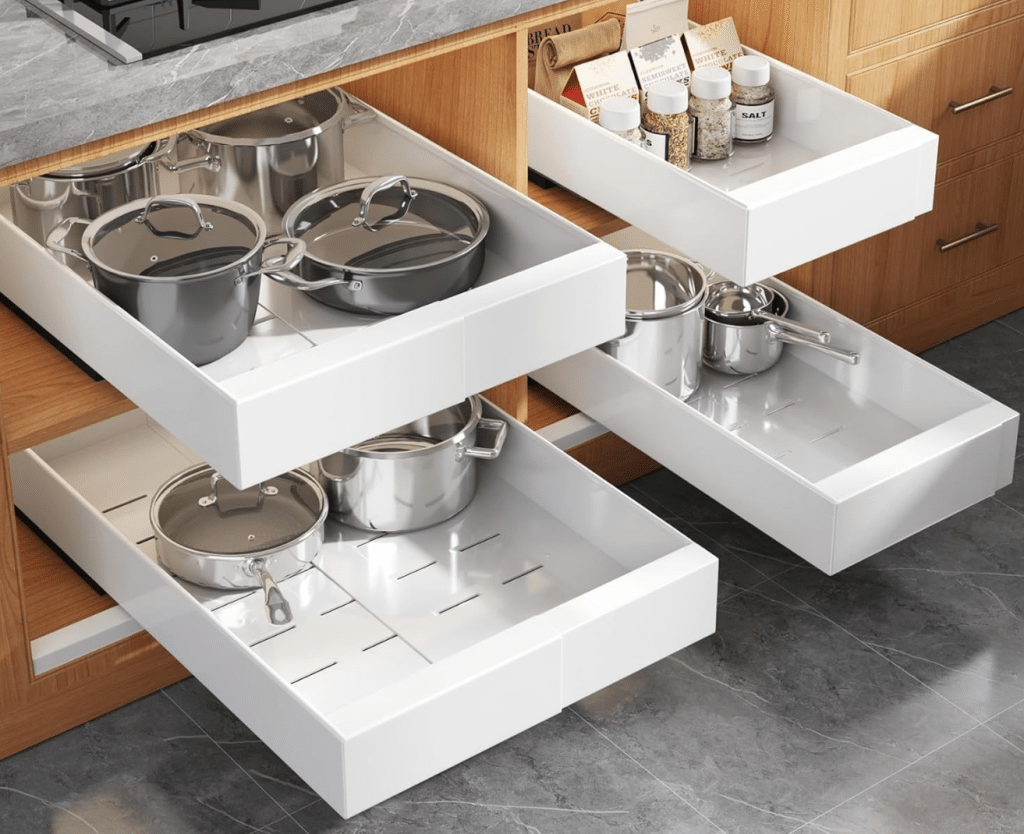
This is the single best upgrade for lower cabinets. Everything slides into view, you can reach items in the back, and you’ll stop buying duplicates of things you forgot you had. Look for options that fit your exact cabinet width—adjustable models like this work for most standard sizes.
Keep the front third of deep shelves for daily items
Push backstock and occasional-use items to the back. The front zone is for things you grab multiple times a week. This simple kitchen organization rule keeps deep cabinets functional.
Use vertical dividers for flat items
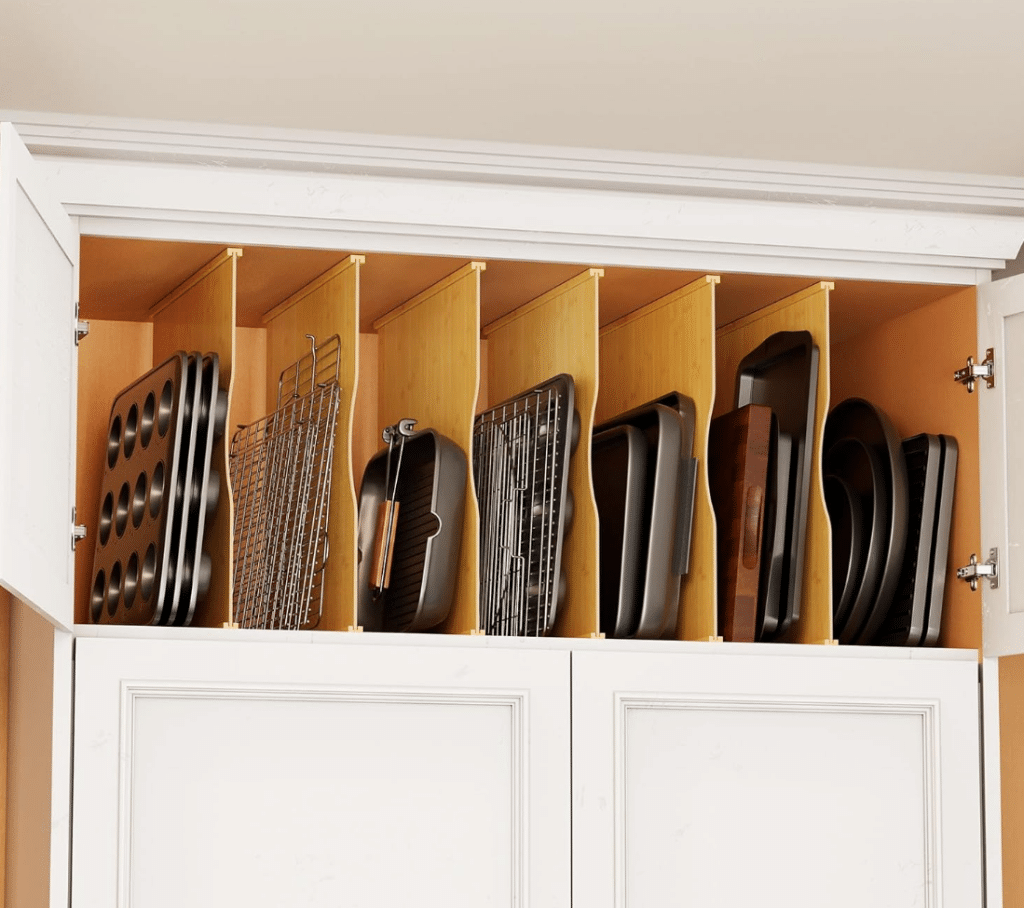
Baking sheets, cutting boards, and serving trays shouldn’t be stacked. Install vertical dividers (tension rods like these work great, or buy adjustable dividers) so each item stands upright. You can grab what you need without moving everything else.
Add shelf risers for pots and pans
Instead of nesting pots inside each other, use a shelf riser to create two levels. Small pots on top, large ones below. You can see everything, grab what you need, and nothing tips over when you pull one out.
Remove cabinet doors on one or two frequently-used cabinets
This sounds drastic, but hear me out. For the cabinet with your everyday dishes or glasses, removing the door forces you to keep it organized (you’re looking at it constantly) and makes access instant. It works especially well for kitchens where cabinet doors constantly get left open anyway.
Use Vertical Space Without Overstacking
Stacking everything to make it fit works—until you need the bowl at the bottom.
Vertical space only helps kitchen cabinet organization when it improves visibility and access, not when it creates a game of Jenga every time you cook.
Stack plates and bowls with shelf risers, not on each other

Use a shelf riser to create two levels of dishes. Bottom plates stay accessible, top plates don’t require moving the entire stack. This one change makes daily dish access infinitely easier.
Install tension rods vertically as instant dividers
Turn small tension rods 90 degrees and install them vertically in cabinets. They create dividers for pot lids, baking sheets, or cutting boards in about 30 seconds. Cost: $5. Impact: massive.
Use command hooks inside cabinet doors
Stick hooks inside doors for measuring cups, pot holders, or small utensils. This kitchen organization trick frees up drawer space and keeps frequently-used items right where you need them without taking up shelf space.
Store pot lids in a file organizer on the cabinet floor
Stand a plastic file organizer on the floor of a lower cabinet. Slot pot lids in vertically by size. They’re visible, easy to grab, and not taking up valuable shelf real estate.
Keep only one backup of stackable items
You don’t need 12 dinner plates if you’re only ever cooking for 4 people. Excess creates clutter. Keep what you actually use regularly, donate the rest. Less volume makes kitchen cabinet organization dramatically easier.
Give Cabinets Room to Breathe
Here’s what nobody wants to hear: no organizer works if cabinets are packed to the brim.
Before adding systems, do a quick edit. Remove duplicates, let go of items you rarely use, rehome appliances that don’t earn their space.
Kitchen organization stays functional longer when there’s visible breathing room. Empty space is a feature, not a failure.
The “one in, one out” rule for kitchen items
When you buy a new pan, donate an old one. When you add a new mug, remove one you never use. This keeps cabinet volume stable and prevents the slow creep of clutter that ruins even good kitchen cabinet organization systems.
Box up seasonal or special-occasion items
You don’t need holiday platters taking up daily cabinet space. Box them, label them, store them elsewhere. Your everyday kitchen organization shouldn’t accommodate things you use twice a year.
Do a 5-minute cabinet audit monthly
Once a month, open each cabinet and pull out anything that migrated there but doesn’t belong. Amazingly effective for maintaining kitchen organization without major overhauls.
Choose Adjustable Systems Whenever Possible
Kitchens change. What you cook changes. Your kitchen cabinet organization should adapt without requiring a complete redo.
Adjustable shelves, dividers, and pull-outs mean fewer re-organizing sessions later, less money replacing systems, and cabinets that stay functional long-term.
Invest in expandable drawer dividers
These adjust to fit different drawer sizes and can be reconfigured as needs change. Perfect for utensil drawers, where fixed dividers create weird unusable spaces.
Use modular shelf risers you can rearrange
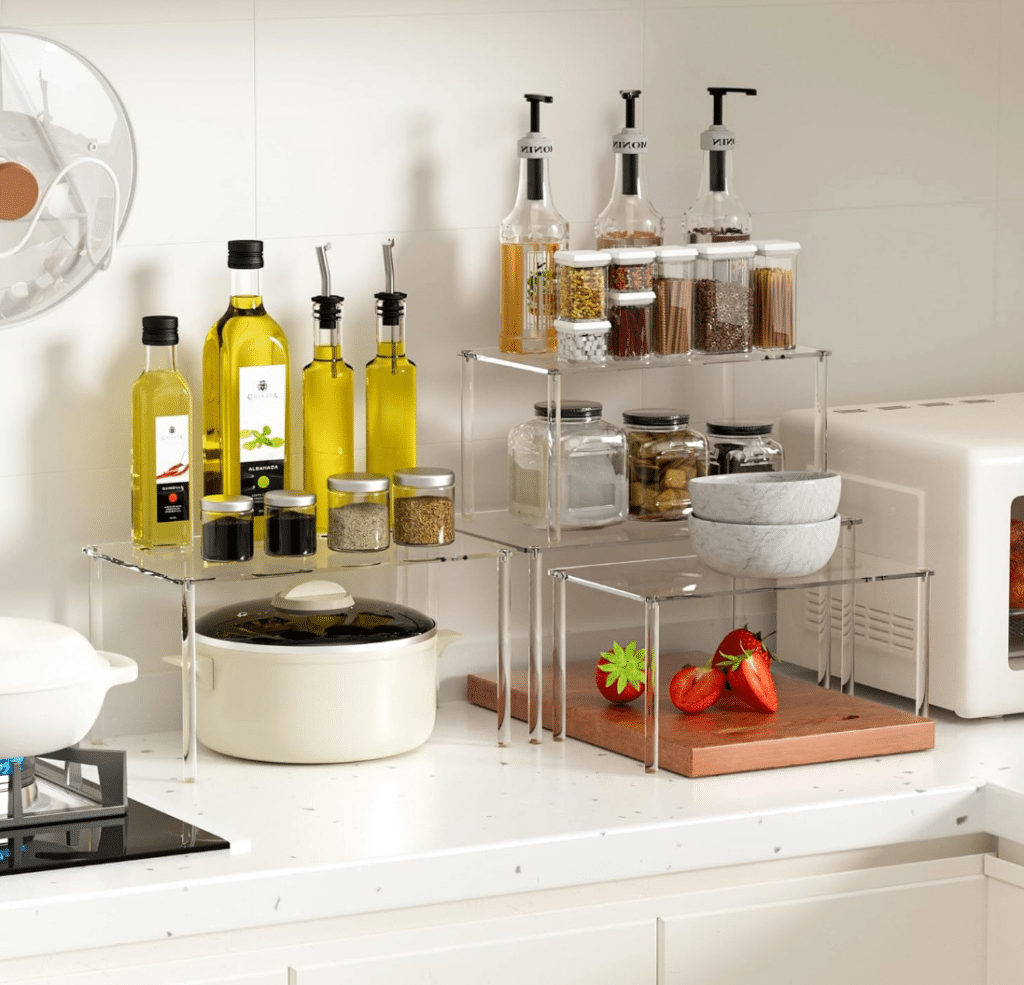
Stackable risers that can be separated and reconfigured, like these, work better than single fixed units. You can adjust height as your dishes or storage needs change.
Skip custom-sized organizers when possible
Unless you’re doing a permanent kitchen renovation, stick with adjustable or standard-sized solutions. You want kitchen organization systems you can take with you or repurpose.
Common Kitchen Cabinet Organization Mistakes
I’ve made all of these:
Buying organizers before understanding the problem. Measure first. Empty the cabinet and actually see what you’re working with. Then buy solutions.
Organizing by category instead of workflow. Mugs don’t all need to live together if you only use coffee mugs near the coffee maker and tea mugs near the kettle.
Overfilling shelves because “it technically fits.” If pulling one item causes three others to shift, the cabinet is too full for any kitchen organization system to work.
Expecting cabinets to stay perfect without maintenance. Even good systems need quick resets. Build in 5 minutes monthly rather than avoiding cabinets until they’re chaos.
If kitchen cabinet organization hasn’t worked before, it’s usually because the system didn’t match real life—not because you didn’t try hard enough.
How I’d Tackle Kitchen Cabinet Organization Step by Step
Don’t overhaul your entire kitchen in one weekend. Start small and build momentum.
Week 1: Pick the one cabinet causing the most frustration. Empty it completely. Decide what truly belongs there based on how you actually cook.
Week 2: Add organizers only after you understand the layout. Install one pull-out shelf or add one set of dividers.
Week 3: Move to the next problem cabinet. Use what you learned from the first one.
Once one cabinet works better, the rest follows naturally. Kitchen organization that happens gradually actually sticks.
Kitchen Organization That Lasts
The best kitchen cabinet organization ideas don’t require constant upkeep. They make it obvious where things belong and easy to put them back without overthinking it.
When your cabinets feel calmer, the rest of your kitchen usually follows.
Kitchen organization that supports your real routine will always outlast systems built just to look good.


