
We live in a world where everything demands our attention at once. News flashes. Messages stack up. Apps tug on us with tiny red dots. Most of us know the exhaustion of it — the restless mind, the scattered focus, the sense that our nervous systems never fully settle.
Researchers now describe “digital stress,” “information overload,” and “doomscrolling” as widespread drivers of anxiety and burnout. It’s not a minor habit anymore. It’s a public-health storyline unfolding in real time.
The Body Knows the Overflow

When researchers studied heavy exposure to distressing news, they found people showed acute stress reactions even from faraway events. The nervous system doesn’t distinguish between “on screen” and “real life.” Heart rate rises. Muscles tighten. The mind senses threat. When this happens dozens of times a day, overwhelm becomes the body’s baseline.
Too Many Signals at Once

Psychologists call it cognitive overload: the moment our mental capacity is exceeded. Studies show that constant switching between apps, tabs, and alerts drains focus and working memory. The brain burns through energy simply trying to keep up. Instead of absorbing information, we skim in self-defense. It’s not that we’re distracted “by choice.” We’re navigating a stimulus load the human mind wasn’t designed to process so quickly.
When Overwhelm Turns Harmful

Digital stress has climbed sharply in recent years. Researchers link it to rising anxiety, sleep loss, fatigue, and overall psychological strain. Social-media overload increases what’s now called “technostress,” a cluster of symptoms including irritability, mental exhaustion, and emotional depletion. When millions report the same pattern, it stops being a personal quirk. It becomes a public-health issue — one shaped by design, culture, and constant connectivity.
The Hours Add Up

Global studies show adults spending six to nine hours on screens each day, with younger adults clocking even more. That’s most of our waking time. Researchers note that long screen exposure correlates with higher stress and lower emotional recovery. Our minds never get the quiet they need to reset. Ironically, the more drained we feel, the more we turn to screens for relief — deepening the loop we’re trying to escape.
Why Drama Pulls Us In

Emotional intensity is deeply reinforcing. Studies of online engagement show people react faster to outrage, fear, and surprise than to neutral information. Platforms learn this and amplify what gets the strongest response. Drama becomes the default. Not because it’s the whole world, but because it keeps us scrolling. Our brains interpret emotional spikes as urgent. Calm doesn’t compete well with adrenaline, so our feeds tilt toward chaos.
Doomscrolling Feels Like Safety
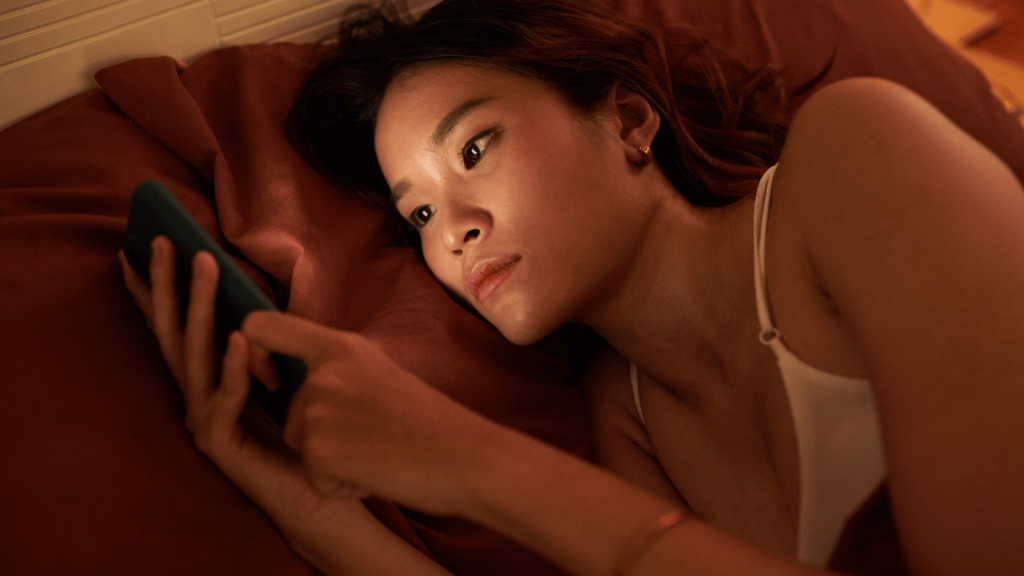
Doomscrolling isn’t self-sabotage; it often begins as self-protection. Research shows that people use constant news checking to ease uncertainty. But studies also reveal that doomscrolling increases anxiety, depression, and even existential worry. It gives the illusion of control while feeding more fear. The brain seeks reassurance… and receives a fresh wave of threat instead.
Work Has Merged with the Noise

Workplace researchers warn that always-on communication increases burnout, emotional exhaustion, and sleep issues. When emails, chats, and notifications arrive at all hours, the body never fully drops into recovery mode. Even digital mindfulness programs, which show promising benefits, struggle against a culture that equates responsiveness with productivity. We didn’t just take our jobs home. We merged them into the same screen that already overwhelms us.
The Willpower Myth

Behavioral science shows environment influences habits more than sheer determination. Our devices are engineered to notify, nudge, and reward. Relying on willpower alone in a high-stimulation environment is like trying to meditate in the middle of a carnival. When people “fail” to unplug, it’s not a moral lapse. It’s a predictable outcome of design meeting biology.
Craving Calm, Seeking Stimulation

We genuinely crave peace. But research on stress shows that overwhelmed minds often seek rapid, low-effort stimulation as relief. Scrolling provides momentary escape, even if it backfires. The mind looks for something easy, immediate, and distracting. Calm requires slowing down — and exhaustion makes slowness feel impossible. So we reach for the screen, not because we don’t want peace, but because we’re too depleted to access it.
Our Nervous System on Alert

Scientists studying stress responses note that constant digital input triggers the sympathetic nervous system — the body’s “alert mode.” Even small notifications can spike cortisol. Over time, this lowers resilience and increases anxiety. The body becomes conditioned to expect the next incoming hit. What feels like restlessness is often a nervous system struggling to regulate in a high-stimulation world.
The Emotional Cost of Constant Input

Digital overload fragments our emotional processing. Studies suggest that constant content switching limits our ability to experience feelings fully before jumping to the next input. Emotional residue builds up unprocessed. We feel “off,” but can’t name why. Instead of clarity, we get an internal haze — the emotional equivalent of too many tabs open.
The Illusion of Connection

Researchers find that heavy social-media use can increase loneliness despite constant connection. Interactions are quick, abundant, and emotionally thin. Our brains crave slower rhythms: tone of voice, facial expressions, shared presence. In a world of instant replies, we receive more contact and less nourishment. The mismatch leaves a subtle ache that scrolling never resolves.
Overstimulation Disguised as Normal

Much like noise pollution, digital overstimulation becomes invisible when everyone is living in it. Studies show that when high stimulation becomes normal, people misjudge their own stress levels. They adapt upward. What would have overwhelmed us ten years ago now feels “regular.” But the body still pays the price — in fatigue, irritability, and reduced capacity for joy.
The Slow Erosion of Attention

Attention researchers report that constant task-switching weakens our ability to sustain focus over time. Not because we’re incapable, but because we practice fragmentation all day. The mind becomes accustomed to interruption. Deep focus begins to feel uncomfortable, even unfamiliar. It’s not an attention deficit. It’s an attention environment.
Sleep Interrupted

Blue light, late-night scrolling, and emotional stimulation all disrupt natural sleep cycles. Studies link nighttime device use to insomnia, shorter sleep, and lower sleep quality. Even quick checks can re-activate alert systems. Over time, sleep deprivation amplifies overwhelm, creating a cycle where exhaustion leads to more scrolling, which leads to more exhaustion.
The Anxiety Loop

Researchers describe a feedback loop: digital overwhelm increases anxiety, and anxiety increases digital use. We scroll to soothe discomfort, but the content we consume heightens it. The loop feels personal, but science shows it’s systemic — a product of platforms optimized for engagement rather than wellbeing.
Calm Feels Like Resistance

Research on mindfulness shows even brief moments of intentional stillness lower stress and improve emotional regulation. Calm interrupts the anxiety loops that digital overwhelm strengthens. Choosing quiet — even one minute — is an act of self-support. Not dramatic. Not glamorous. But deeply effective.
The Path Back to Ourselves

Researchers note that grounding practices, slow breathing, and sensory awareness gently regulate the nervous system. None require abandoning technology. They simply reintroduce slowness. In an epidemic of overload, slowing down becomes medicine. Not avoidance — restoration.
Choosing What Nourishes

The solution isn’t unplugging forever. It’s recognizing what drains and what restores. Research suggests intentional limits, mindful breaks, and curated inputs support mental health far more than rigid digital detoxes. Calm becomes a daily practice — small, doable choices that help us feel like ourselves again.


