

Ever noticed how moving a couch or swapping the positions of your bed and desk can make your entire space—and even your mood—feel brand new? This is the essence of the “rearrange effect,” where simple furniture adjustments can spark psychological renewal. Studies suggest that rearranging your environment promotes a sense of control, reduces stress, and enhances emotional well-being by aligning your space with your evolving needs.
It can even serve as a form of “design therapy,” helping to regulate emotions and boost creativity without major changes. Below, we’ve curated 20 real-life examples from social media, complete with before-and-after style images, to illustrate this transformative power. Interspersed are research insights showing why these tweaks deliver such profound benefits.
Comprehensive Home Reboot
As @tempesttdenise aptly observed: “I rearranged my house. Moved some plants around, moved some art and books. More candles and flowers. Spaced out my furniture more. It feels like a completely different house.”
Sometimes the best kind of therapy is the kind you don’t have to book. Even a small home reset can bring that hit of new energy. Research shows that even tiny shifts in our space help clarify what we actually like and give our mood a boost. It’s an easy way to notice what truly feels at home with you.
Channeling Frustration into Flow
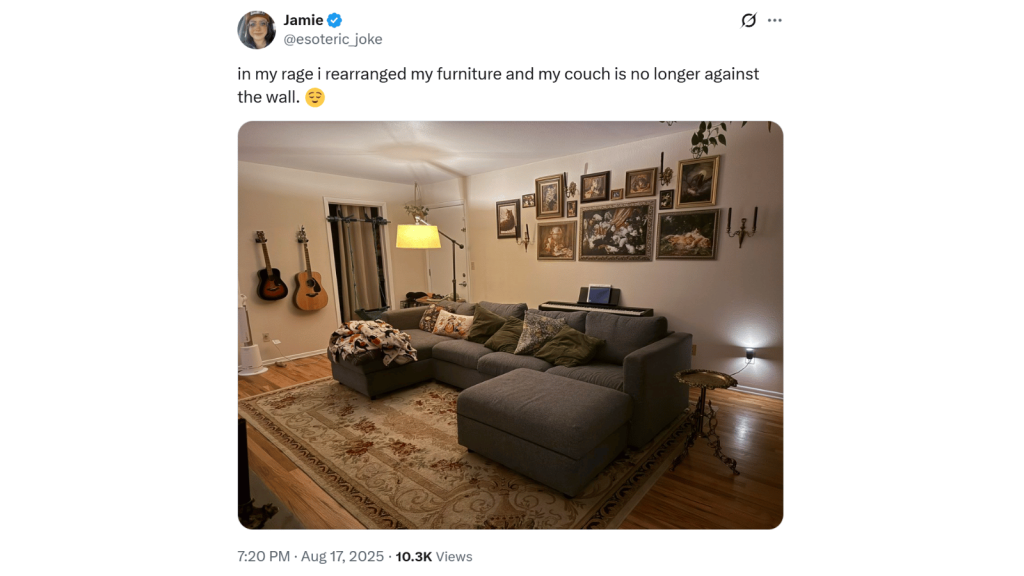
@esoteric_joke shared this candid moment: “in my rage i rearranged my furniture and my couch is no longer against the wall. 😌”
Ah, the cathartic power of moving heavy objects when words fail! Research indicates that redirecting intense emotions through spatial changes can enhance creativity and foster a more positive mindset, turning turmoil into tranquility. Makes sense!
The Habit of Perpetual Renewal

@littlebayschool confessed: “Yes, rearranging furniture completely changes my life. I’d do it every week if I could think of enough new arrangements.”
If only life came with as many reset buttons as our living rooms do. Regular tweaks like these bolster psychological resilience by altering emotional responses, behaviors, and thought patterns via evolved spatial dynamics, as per cognitive studies.
Banishing Bad Vibes, One Bed at a Time

In @damnitmadeline’s words: “Rearranging your bedroom actually does fix your mental problems and I don’t know the exact science behind that but I believe it’s that your bad feelings get stuck under the furniture.”
A touch of folk wisdom with a kernel of truth—after all, who hasn’t blamed the dust bunnies? Evidence supports that organized environments lower cortisol levels, heighten focus, and improve overall disposition.
From Meme to Mindful Makeover
@hephunderground recounted: “A couple of days ago I saw a meme that was something along the lines of “stop blaming yourself for your mistakes. Learn feng shui and blame the furniture”. Jokes aside, it made me aware of the arrangement of my room. Today I went through absolutely everything, decluttering, dusting, and rearranging. I got rid of this huge desk that took up 30% of the room because I always opted to do work on the floor anyway. My room is now feng shui optimized with lots of floor space. I feel reborn. Highly recommend.”
Internet humor sparking real change? Not as far-fetched as it sounds. Integrating feng shui harmonizes inner evolution with outer aesthetics, promoting mental equilibrium according to design psychology.
A Fortnight of Fresh Starts
As detailed by @bigsiha: “in the last two weeks, i’ve basically transformed my whole place and it feels SO MUCH BETTER. got rid of half my closet, old equipment i wasn’t using, organized my closets, put up old furniture that i had been slacking on, got new pillows finally, UGH IT FEELS GOOD.”
Two weeks to reclaim your sanctuary—efficiency at its finest. Such systematic overhauls mitigate anxiety and elevate efficiency, with research affirming that intentional layouts enrich quality of life.
Reclaiming Space Post-Heartache
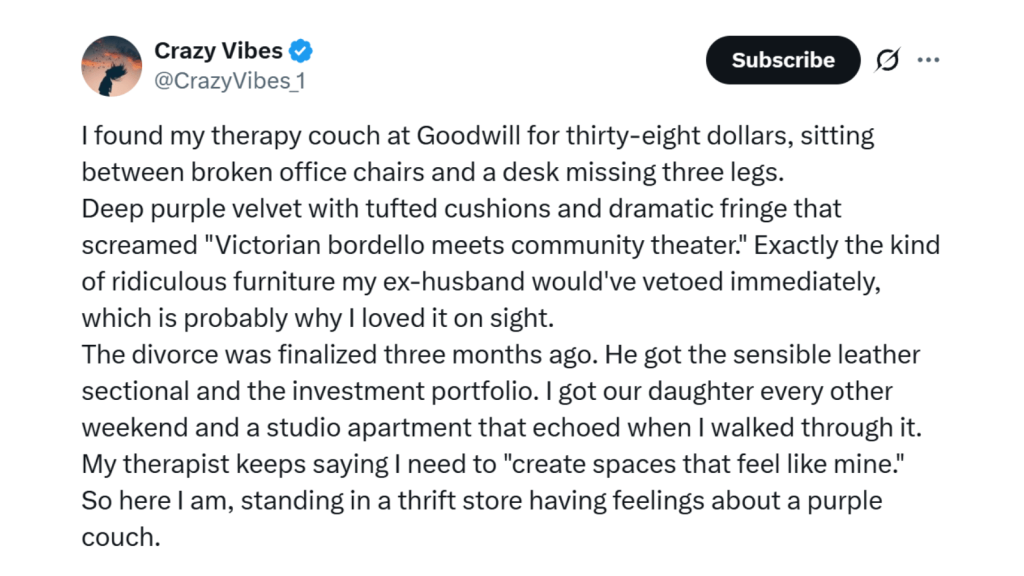
@CrazyVibes_1 reflected: “I found my therapy couch at Goodwill for thirty-eight dollars… My therapist keeps saying I need to ‘create spaces that feel like mine.’ So here I am, standing in a thrift store having feelings about a purple couch…”
Because nothing says “moving on” like a bargain-bin breakthrough. Post-transition rearrangements like this draw on therapeutic design to ease stress and depressive symptoms.
Desk Dynamics Redefined

@me_wo_tojite marveled: “rearranged my workdesk today……Its insane how much more efficient and comfortable your living space is with just simple adjustments and better positioning….. those fengshui experts were onto something all along🤯🤯🤯🤯”
A modest desk shift yielding outsized rewards—proof that small pivots can pay dividends. Tales like this highlight how targeted realignments amplify productivity and ease, drawing on principles like feng shui to balance energy and mindset, as supported by environmental psychology.
The “Why Didn’t I Do This Sooner?” Moment

@SpoopBee admitted: “Rearranged my living room and it’s SO MUCH BETTER. And wow I’m mad I didn’t do it sooner.”
Hindsight, that ever-reliable critic. Swift modifications offer potent psychological rewards, enhancing mood and perspective with minimal effort.
A Reluctant but Rewarding Shuffle
From @docm77: “Also Karin took advantage of my ‘free time’ and started project shuffle all heavy furniture in the living room clockwise cause it ‘it makes more sense’. She is right I have to admit. Sigh. So now, 4 cupboards have been moved.”
The sigh says it all, but the results speak louder. Logical realignments foster well-being by optimizing flow, thereby curbing stress through superior organization.
The Perils of Desk Experimentation
@PolariSuA_ lamented: “I tried re arranging everything on my desk (plushies, figurines, books, etc,,) after months of having everything in boxes and I thought ok this is gonna feel fresh and new…nope it’s worse than before I hate it it ruined my day lmao.”
Not every tweak is a triumph—lesson learned. Yet even missteps emphasize the deep emotional ties to our spaces, aiding in syncing inner and outer harmony for improved mental clarity.
Boredom’s Productive Outlet
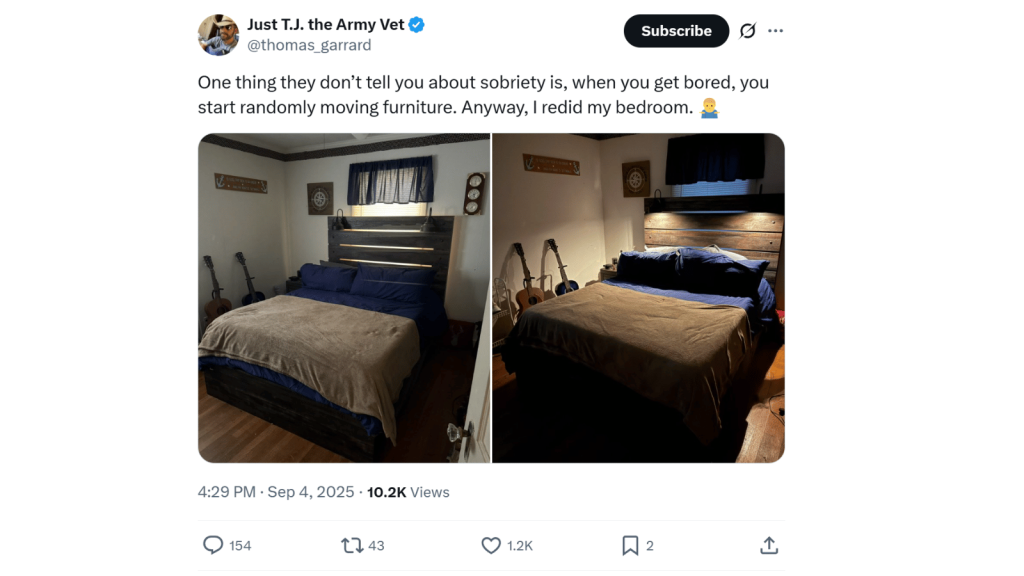
@thomas_garrard noted: “One thing they don’t tell you about sobriety is, when you get bored, you start randomly moving furniture. Anyway, I redid my bedroom. 🤷♂️”
Idle hands, meet movable feast. Employing rearrangement as a transitional tool uplifts spirits and eases adaptation phases.
Comfort Over Convention
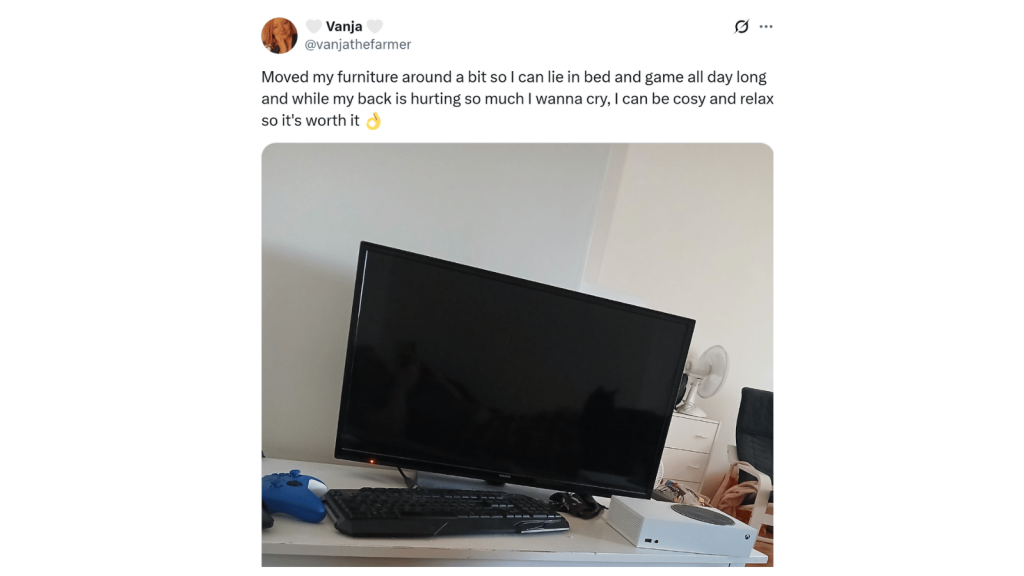
@vanjathefarmer explained: “Moved my furniture around a bit so I can lie in bed and game all day long and while my back is hurting so much I wanna cry, I can be cosy and relax so it’s worth it 👌.”
Prioritizing leisure with a side of ergonomic regret—relatable. Tailored configurations promote relaxation, diminishing tension via bespoke environments.
Impulse Leading to Insight
@nerdyrican rejoiced: “Completely rearranged my living room on a whim and last burst of energy yesterday, woke up today so happy I did.”
The whimsy of late-night inspiration often pays dividends. Spontaneous shifts frequently yield swift mood enhancements, as personal accounts attest.
Escaping the Rut with Intent
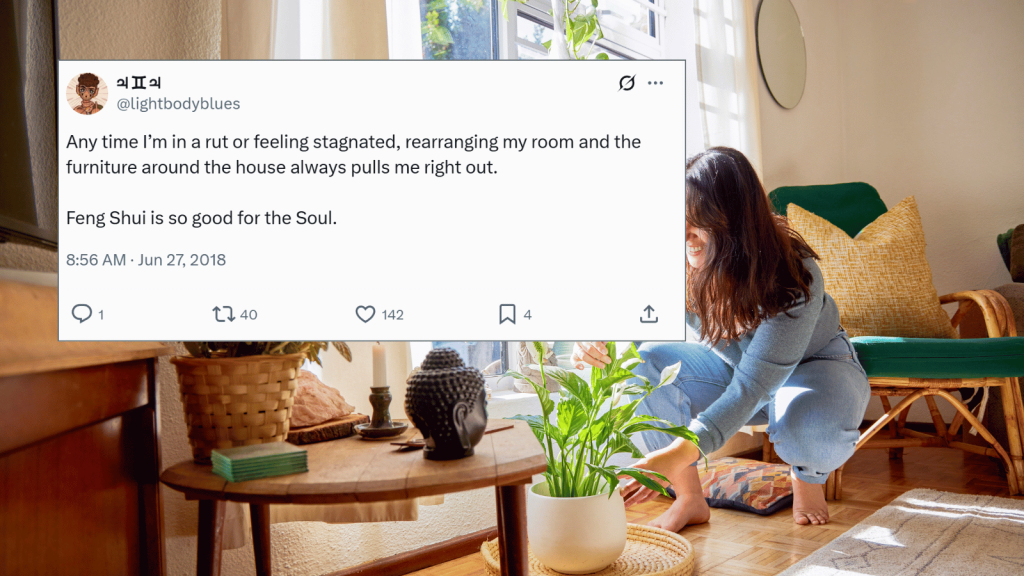
@lightbodyblues advised: “Any time I’m in a rut or feeling stagnated, rearranging my room and the furniture around the house always pulls me right out. Feng Shui is so good for the Soul.”
When stagnation calls, feng shui answers. This approach cultivates innovation and affirmative mental transitions.
Incremental Wins Against Overwhelm
@swirlixcals celebrated: “i managed to tidy some of my depression room today + changed my sheets 🥹 oh my god im so grateful i did that, it feels like a massive relief. the corners of the room are still a pigsty but my bed area and floor is so much cleaner… i could actually cry, it feels so nice.”
Small victories in the face of “depression rooms” can feel monumental. Such efforts mitigate mental strain, bolstering concentration and positivity.
Revitalizing the Workspace

@GusRachels recommended: “It was getting increasingly unbearable to spend time in my home office so I tore down half of the foam paneling and rearranged the furniture. And folks? I recommend it.”
From unbearable to unbeatable—a classic turnaround. Office optimizations heighten productivity through attuned, comfortable settings.
Instinct Over Indecision
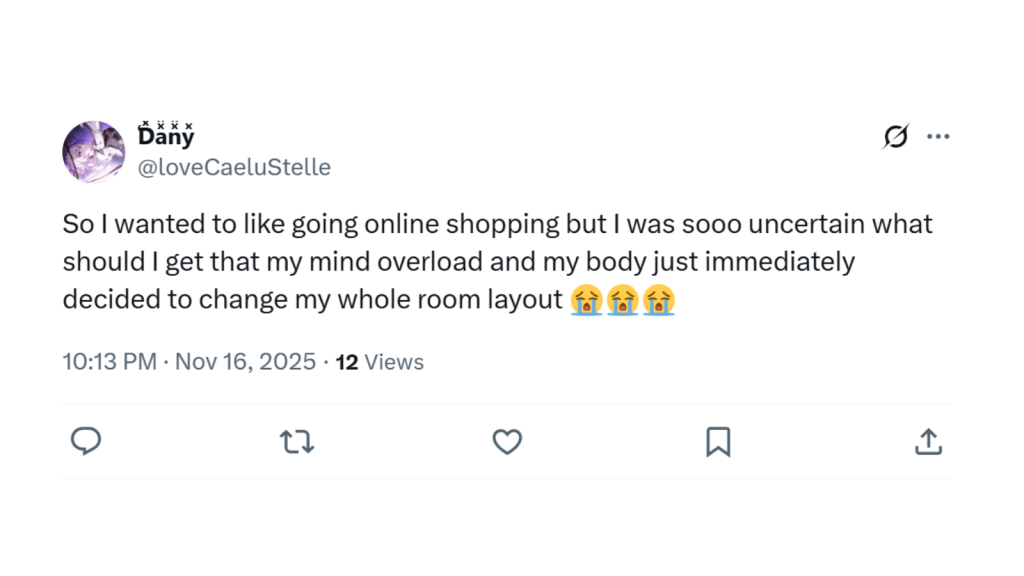
@loveCaeluStelle quipped: “So I wanted to like going online shopping but I was sooo uncertain what should I get that my mind overload and my body just immediately decided to change my whole room layout 😭😭😭.”
When the brain shorts out, the body takes the wheel. These reflexive actions manage cognitive overload, granting control and respite.
Partnership in Progress

@thewebbie mused: “My GF has officially taken over… She’s rearranged everything, scrubbed every corner, and somehow made the place smell like lavender instead of “was this shirt clean or dirty?” I can’t find anything where I left it, but I can’t argue: It’s… livable now. Even nice…” (truncated).
Shared transformations, with a hint of surrender. Collaborative efforts revamp spaces, alleviating melancholy via refined designs.
The Art of Conversational Layouts
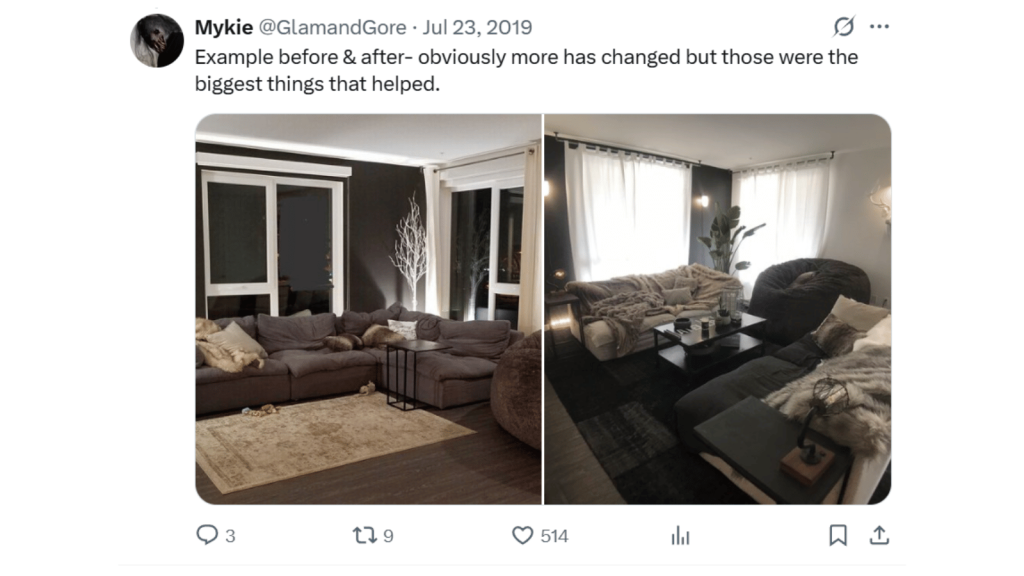
@GlamandGore pondered: “Been thinking about this a lot recently, especially because I like a more minimal look which can look less homey, & finally figured it out-for me it was plants & switching my couch from an L shaped layout against the walls to a conversational layout facing eachother in the middle.”
Minimalism meets sociability—a clever pivot. Adapting arrangements for interaction supports communal well-being, as echoed in user experiences.
In wrapping up, the rearrange effect illustrates how modest spatial adjustments can yield substantial personal gains, from heightened efficiency to tempered unease. These vignettes reveal the interplay between environment and ethos—perhaps it’s time to nudge that chair and observe the ripple.


