

I didn’t try the ten-minute rule because I’m that person who reads life hacks and instantly applies them. I tried it because I was lying on my couch at 1 a.m., Googling “why does starting feel impossible,” while eating dry cereal out of the box. The internet kept insisting ten minutes could break the paralysis. I rolled my eyes for weeks. But one morning, frustration won. I tried it. And annoyingly, it worked.
Why We Procrastinate
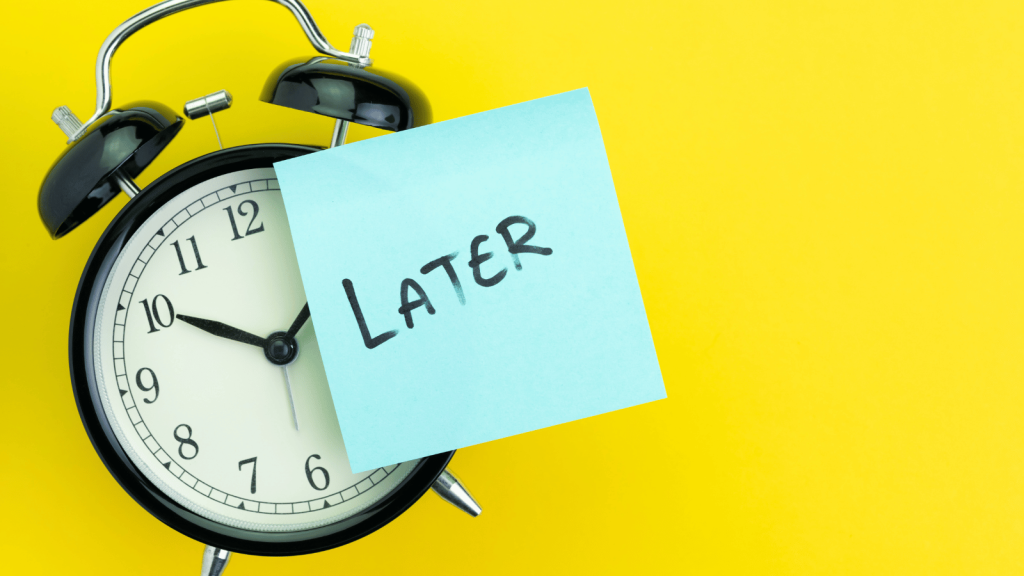
Once I actually looked it up, the science made way too much sense. Procrastination isn’t laziness — it’s emotional avoidance. If a task feels confusing or mildly terrifying, the limbic system reacts like, “nope, too much.” The prefrontal cortex, which handles logic, tries to speak up but gets drowned out. Avoidance gives instant relief, so the brain chooses it. The task itself isn’t the problem. It’s the discomfort wrapped around it.
The Real Issue: Starting, Not Doing

Most of the things I procrastinate aren’t hard once I’m in them. The hard part is the five minutes before I start — the part where my brain spins stories about how annoying or overwhelming everything will be. Understanding that helped me stop blaming myself. Starting triggers discomfort; working often doesn’t. So the problem wasn’t my work ethic. It was the emotional static right before the first step.
The Midnight Research Spiral

During one of those late-night spirals where your brain refuses to chill, I kept stumbling across references to the ten-minute rule. Blog posts, threads, tiny studies — all saying the same thing: lowering the “cost to begin” reduces procrastination. Some people said they’d changed their entire workflow with it. I didn’t fully believe them, but it planted the idea that maybe my brain needed something smaller than “sit down and finish this.”
The First Try I Fully Expected to Fail

The next morning, I tried it with a task I’d avoided for … an embarrassing amount of time: scrubbing the bathroom floor. I set a ten-minute timer, convinced it would accomplish nothing. But within a few minutes, I noticed the dread I’d carried dissolved faster than I expected. I wasn’t doing amazing work or anything, but I was working — which felt like a genuine plot twist.
The Weird Shift Around Minute Five

Research calls this the “activation energy drop.” Once you begin, the psychological cost plummets. Around minute five, I felt that shift physically — like my brain unclenched. The task didn’t feel big or scary anymore. It felt like something I could slowly chip at. It was strange how quickly the heaviness lifted once I crossed that invisible starting line.
When the Timer Ended and I… Kept Going

When the timer hit zero, I figured I’d drop everything instantly. But I didn’t. I kept going because once I’d started, stopping felt strangely abrupt. That’s the Zeigarnik effect — a psychological finding that our brains don’t like incomplete actions. When we begin a task, the mind creates a kind of “open loop,” and it quietly nudges us to close it. I’d never noticed that before because I rarely got far enough to trigger it.
Trying It Again Just to Check

The next day, I repeated it, fully expecting the magic to disappear once I was paying attention. But the same thing happened. I started my work reluctantly, got into it, and kept going past the timer. At that point I realized it wasn’t luck — the rule was legitimately lowering the emotional friction I always felt about getting started. And honestly, it annoyed me how simple the fix was.
Why Shrinking the Task Works So Well

My brain tends to inflate tasks until they feel enormous. Ten minutes shrinks everything down to something bite-sized. Instead of “write the whole thing,” it becomes “just write for ten minutes.” That shift helps because the limbic system backs off when the perceived threat is tiny. The task becomes less of a monster and more of a mild inconvenience — and my brain can handle mild.
The Science I Could Actually Follow

Most of the science boils down to this: the emotional brain reacts faster than the logical one. Big tasks fire up the emotion circuits; small tasks barely register. Ten minutes tricks the brain into letting the logical side take over long enough to begin. It’s not about turning yourself into a productivity machine. It’s about giving the worried part of your brain less to panic about.
Activation Energy in Real Life

Activation energy sounds like a chemistry term, but it applies to behavior, too. It’s basically the mental cost of beginning. Mine is usually sky-high. But the smaller the starting requirement, the lower that cost becomes. Ten minutes creates the tiniest possible spark — just enough to get over the hump. Once I’m moving, I no longer need that spark because the work carries itself.
The Pull of an Unfinished Start

I used to assume starting something meant I had to finish it right away, which made me avoid everything. But once I started breaking things into ten-minute chunks, unfinished tasks didn’t feel suffocating. They just hovered in my mind gently. The Zeigarnik effect explains this: an open loop invites completion. Instead of dread, I felt a soft pull to return. It was the first time incomplete things didn’t overwhelm me.
The Surprise of Tasks That Take Less Than Ten Minutes

One of the rudest discoveries was how many tasks actually took less than ten minutes. Messages I’d avoided, forms I’d postponed, small updates that lived rent-free in my anxiety for weeks — most of them were tiny once I actually started. The rule helped me see how often my fear didn’t match reality, which made everything feel less dramatic.
Days When Ten Minutes Was Plenty

Some days I really did just do ten minutes and stop. And those days mattered. They taught me that consistency isn’t about pushing myself to the limit — it’s about showing up at all. Giving myself permission to end at ten minutes kept the habit from becoming another pressure-filled standard I couldn’t meet. The rule worked because it stayed small.
Days When Ten Minutes Opened a Door

Sometimes ten minutes acted like a warm-up. I’d start stiff and resistant, and by minute ten, I wasn’t done, but I also wasn’t dreading anything anymore. Researchers say flow requires clarity and low emotional friction, and breaking the start into something tiny created both. The rule didn’t guarantee deep focus, but it created the conditions for it — which was something I’d never managed consistently before.
The Habit That Formed Almost Accidentally

After a few weeks, I realized the rule had turned into a small habit without me trying to make it one. My brain trusted the pattern because I wasn’t forcing hours of work on myself. Ten minutes felt safe and predictable. That made starting easier each time. Not because I changed as a person, but because the emotional cost of beginning shrank with repetition.
Using It for Annoying Chores

I began using the rule on chores I’d normally avoid until they grew into a personal crisis: laundry, dishes, inbox cleanup. Ten minutes made them tolerable instead of overwhelming. Even when I didn’t finish everything, a small dent made the whole environment feel less chaotic. It was nice seeing evidence that I was capable of more than avoidance, even on low-energy days.
Using It for Stuff That Actually Matters

I also used it on tasks that felt emotionally heavy — writing, planning, creative projects. These were the things I cared about most but avoided the hardest. Ten minutes gave me a way to show up without expecting myself to create a masterpiece. It lowered the emotional charge enough that beginning felt approachable. I didn’t need motivation. I just needed a gentler entrance.
Realizing I Wasn’t Broken

Using the rule consistently helped me realize my procrastination wasn’t a character flaw. It was a protective reflex. My brain was trying to dodge discomfort, not sabotage my life. Once I understood that, I became less harsh with myself and more curious. The ten-minute rule wasn’t just a strategy — it was proof that I could work with my brain’s wiring instead of fighting it.
Why This Rule Actually Stuck

It stuck because it matched my actual life. Not my aspirational life, where I’m organized and energized all the time. My real life, where I get overwhelmed easily and need tasks to feel emotionally manageable. Ten minutes made everything feel less intimidating. It offered a starting point that didn’t scare me off, which meant I finally had a system I could use even on low-capacity days.
The Doorway I Trust Now

Now almost everything I do begins with, “Okay, just ten minutes.” It’s not glamorous, but it works. It gives me a doorway into whatever I’ve been avoiding without demanding perfection or stamina I don’t have. It’s a gentle push instead of a harsh shove, and somehow that’s exactly what my brain needed. I don’t trick myself into productivity anymore — I just give myself a place to start.


